


Uncertainty can make ordinary life feel fragile. A diagnosis, a job change, a strained relationship, a cultural shift or an unanswered prayer can expose how little control we really have. Faith in God does not make every outcome predictable, but it gives your soul a firmer place to stand when life feels unstable.
The Bible never asks believers to pretend that uncertainty is easy. David cried out in the Psalms, Paul described pressure that felt beyond his strength and Jesus told His followers that trouble would be part of life in this world. If anxiety is already part of what you are carrying, Kingdom Signals has also written about faith in an age of anxiety, which may help you name that struggle with honesty instead of shame.
What Faith in God Steadies, and What It Does Not Remove
Biblical faith is not the denial of reality. It is not optimism with religious language added on top. Hebrews 11:1 describes faith as confidence in what is hoped for and assurance about what is not seen. That means faith deals directly with the unseen, the unfinished and the not-yet-resolved parts of life.
God may not tell you how every chapter will unfold. He may not explain the timing, remove the waiting or answer every question on your preferred schedule. What He does give is Himself. Scripture presents God as faithful, present, wise, just, merciful and near to those who call on Him.
When Scripture calls you to trust, faith in God is less about mastering the future and more about resting in the character of the One who holds it.
That distinction matters. Many people try to find steadiness in certainty itself. They want a guaranteed plan, a visible timeline or a clear explanation before they can breathe again. The Christian life offers something stronger than certainty about circumstances. It offers communion with God in the middle of circumstances.
Uncertainty Reveals What Your Heart Is Leaning On
Uncertain seasons are revealing. They show where we instinctively look for safety. Some people reach for control, trying to manage every variable. Some reach for distraction, filling every quiet moment so fear cannot speak too loudly. Others withdraw, assuming that if they expect disappointment, it will hurt less.
None of those responses are unusual, but they cannot carry the weight of the human soul. Control eventually meets limits. Distraction eventually grows thin. Self-protection often creates loneliness instead of peace.
Faith in God becomes steadying because it changes the object of your trust. You are no longer asking your plans, emotions or resources to be your savior. You are learning to say, often with trembling hands, that God is still worthy of trust before the situation becomes clear.
This does not mean wise planning is wrong. Proverbs commends diligence, counsel and preparation. The issue is not whether you make plans, but whether your plans become the source of your peace. A surrendered heart can prepare responsibly without demanding that preparation become a substitute for God.
The Biblical Pattern: God Gives Enough Light for the Next Step
Many believers want a full map, but Scripture often shows God giving enough light for the next obedient step. Abraham was called to go before he knew the destination. Israel followed the cloud and the fire one day at a time. The disciples followed Jesus before they understood the cross, the resurrection or the mission that would come after.
Faith in God often grows through this pattern of partial visibility. You may not know how the whole situation will resolve, but you can usually discern the next faithful thing. Pray honestly. Tell the truth. Forgive where God is calling you to forgive. Ask for counsel. Refuse bitterness. Serve the person in front of you. Open Scripture again tomorrow.
Here is a simple way to recognize the difference between fear-driven living and faith-shaped steadiness:
| When uncertainty says | Scripture redirects you toward | A steady response |
|---|---|---|
| You must know the outcome now | Proverbs 3:5-6 | Ask God for the next obedient step |
| You are alone in this | Psalm 23:4, Matthew 28:20 | Practice awareness of God’s presence |
| Provision depends only on you | Matthew 6:31-33 | Seek first the kingdom and act wisely |
| Delay means God has forgotten | Psalm 27:14, James 5:7-8 | Wait with prayerful endurance |
This kind of steadiness is rarely dramatic. It often looks like obedience repeated quietly until your inner life begins to settle under God’s care.
Practices That Keep Your Soul Steady
Faith is a gift, but it is also nurtured through ordinary rhythms. You do not become steady by waiting until life calms down. You become steady by meeting God in the middle of the noise, again and again.
Faith in God grows stronger when your habits train your attention toward what is true. Fear wants constant rehearsal of worst-case scenarios. Scripture, prayer and worship interrupt that rehearsal and bring your mind back to the God who speaks, sustains and shepherds.
A few simple practices can help you stay grounded:
- Read one short passage of Scripture slowly before checking the news, email or messages.
- Pray honestly, using plain words instead of polished religious phrases.
- Name one evidence of God’s faithfulness from your past.
- Ask a mature believer to pray with you instead of carrying the burden alone.
- Limit the voices that keep your soul in constant alarm.
If prayer feels difficult because anxiety keeps circling the same fears, this reflection on how to pray when you are anxious offers a practical place to begin.
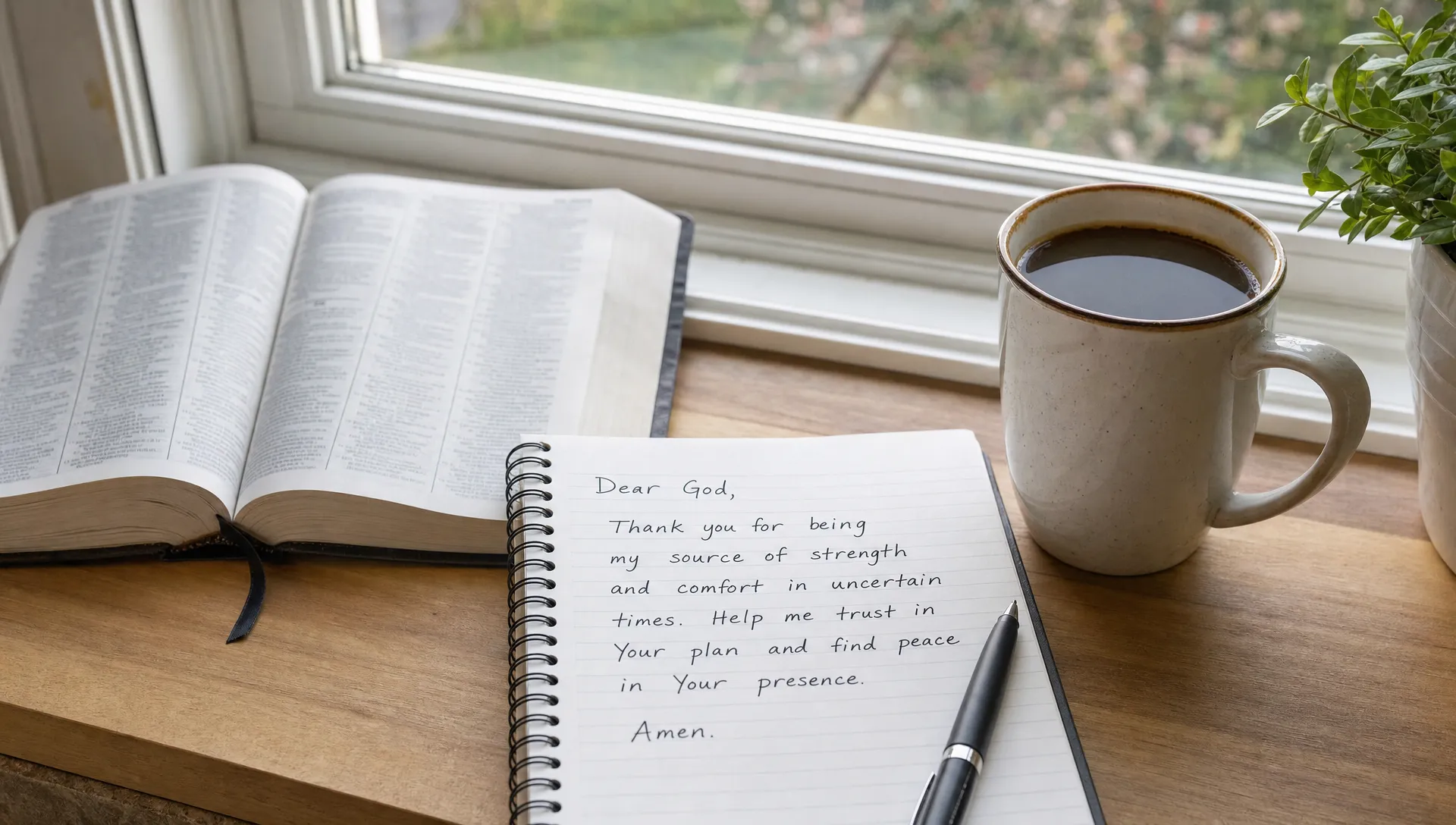
These practices are not spiritual tricks. They are ways of becoming available to grace. You are not trying to earn peace. You are making room to receive it.
Community Helps You Remember What Fear Makes You Forget
Uncertainty can isolate people. When fear rises, it often convinces you that no one would understand, that your burden is too complicated or that you need to be stronger before you let anyone in. The New Testament gives a different vision. Believers are members of one body, called to encourage one another, carry burdens and stir one another toward love and good works.
Faith in God is not meant to be practiced as a private survival strategy. It is formed in worship, friendship, family life, local church community and daily discipleship. Sometimes the most stabilizing gift is not a new answer, but a faithful person who sits with you, prays with you and reminds you of what is true.
Formation also happens through the environments we choose. Families often look for communities where learning, character and spiritual direction are held together. A Catholic educational setting such as Colegio Pioneros in Chicureo is one example of how academic formation can be paired with a faith-shaped environment for young people.
The wider point is simple: repeated formation matters. What you hear every week, who you walk with and where you turn for wisdom all shape how you respond when life becomes uncertain.
When You Still Feel Unsteady
There will be days when you believe God is faithful and still feel afraid. That does not mean your faith has failed. Many of the Psalms move back and forth between distress and trust, sometimes in the same breath. Biblical faith often sounds less like polished confidence and more like a heart bringing its fear to God instead of hiding from Him.
Faith in God steadies you over time because it teaches you to interpret your life through God’s character, not only through your immediate feelings. Feelings are real, but they are not always reliable guides. They can tell you that you are vulnerable, tired or grieving. They cannot always tell you the truth about God.
This is where patience becomes part of trust. Waiting is not passive when it is filled with prayer, obedience and hope. If you are in a season where the answer seems delayed, this article on why faith requires patience explores that connection more deeply.
Steadiness does not always arrive as a sudden emotional shift. Sometimes it grows slowly, as you keep choosing trust in small places. You open the Word again. You ask for help again. You confess fear again. You take the next step again. Over time, the ground beneath you feels different, not because circumstances became easy, but because God became more central.
Frequently Asked Questions
Does faith mean I should not feel afraid? No. Faith does not require emotional numbness. Scripture makes room for fear, grief and lament, but it teaches us to bring those emotions to God rather than letting them rule us.
How can I strengthen my faith during uncertainty? Begin with small, repeatable practices: read Scripture daily, pray honestly, remember past evidence of God’s faithfulness and stay connected to mature believers who can encourage you.
What if I trust God but still do not understand what He is doing? Understanding and trust are related, but they are not the same. Faith in God can coexist with unanswered questions because it rests on His character, not on complete explanations.
Is planning a lack of faith? No. Scripture commends wisdom, counsel and preparation. Planning becomes spiritually unhealthy when your plan becomes the source of your peace or the thing you trust more than God.
A Simple Next Step
If life feels uncertain today, do not pressure yourself to solve the whole future. Bring this day to God. Ask for enough light for the next faithful step. Then take that step with Him.
For weekly biblical encouragement, devotional reflections and practical guidance for everyday faith, consider subscribing to the Kingdom Signals newsletter and staying rooted in Scripture one week at a time.