


Meeting with God daily in the Bible is not about finishing a reading assignment or producing a certain feeling. It is about coming to the God who has made himself known through Scripture, listening carefully and responding with trust. Some mornings that will feel refreshing. Other mornings you may arrive tired, distracted or unsure what to say.
You do not need an impressive journal, an hour of silence or a perfectly organized life to begin. You need a passage of Scripture, a willingness to pay attention and room to answer God honestly.
The aim is more than maintaining a habit. It is fellowship with God: learning his character, receiving his correction and allowing his promises to shape how you live. A simple rhythm of prayer, reading and response can help you approach that time without turning it into another performance to manage.
What It Means to Meet With God Daily in the Bible
The Bible presents daily dependence on God as ordinary faithfulness. Jesus taught his disciples to ask for daily bread in Matthew 6:11. Psalm 1 describes a person who meditates on God's instruction day and night. These passages encourage ongoing dependence, not a particular devotional schedule.
Your access to God rests on Jesus, not on your reading streak. Hebrews 4:14–16 grounds our confidence to approach God in Jesus, our great high priest. We come for mercy and grace because we need them, not because we have completed enough spiritual tasks.
That changes how you open your Bible. You are not trying to persuade an unwilling God to notice you. You are responding to his invitation to draw near through Christ.
Meeting with God daily in the Bible also does not mean expecting a private message hidden in every verse. Scripture has a meaning rooted in its context. Prayerful reading receives that meaning before asking how it speaks to your circumstances.
A Simple Rhythm: Pray, Read and Respond
Choose a short, complete passage rather than an isolated sentence. A paragraph from a Gospel, a section of an epistle or a brief psalm gives you enough context to understand what you are reading. Then move through the following rhythm without rushing.
Begin with an honest prayer
Before reading, acknowledge how you are actually arriving. If you are anxious, say so. If you feel resistant or distracted, bring that into prayer rather than hiding it behind polished language.
You might pray:
Father, I come to you through Jesus. Help me understand what I read. Show me what is true about you and help me respond with faith. My attention is scattered today, so teach me to listen.
This is not a formula that guarantees an emotional experience. It is a way of expressing dependence. Psalm 119:18 models a prayer for God to open the reader's eyes to the wonders of his instruction.
You can meet with God daily in the Bible without pretending to feel spiritually ready. Honesty is a better starting point than trying to manufacture enthusiasm.
Read for meaning before looking for application
Read the passage once to follow its movement, then again to notice details. Identify who is speaking, who is being addressed and what the surrounding verses contribute.
Ask three questions: What does this passage say? What does it reveal about God? What response does it call for?
The order matters. A promise spoken to a particular person is not automatically a guarantee about your next career decision. A narrative describing someone's actions does not necessarily tell you to imitate them. Let the kind of writing and its context guide your understanding.
If you want to explore God's character more deliberately, these passages that reveal who God is provide a helpful starting point.
As you meet with God daily in the Bible, understanding one paragraph faithfully is more valuable than collecting several verses that seem to confirm what you already wanted.
Turn what you read into prayer
After reading, answer God in light of the passage. This keeps Bible reading from becoming only an exercise in gathering information.
If the text reveals God's patience, thank him for it. If it exposes dishonesty, confess it. If it calls you to love someone difficult, ask for help obeying. If it describes suffering, bring your pain before him without forcing a cheerful conclusion.
For example, after reading Philippians 4:4–9, you might name a specific worry, thank God for a particular provision and ask him to help you direct your attention toward what is true. The passage gives your prayer substance without requiring you to copy someone else's words.
Meeting with God daily in the Bible includes speaking as well as listening. You are not merely studying a subject; you are responding to the Lord whose truth you have encountered.
Carry one faithful response into the day
James 1:22 warns against hearing God's word without doing what it says. A devotional time should therefore make room for obedience, but that does not require a dramatic plan every morning.
Choose one response that genuinely follows from the passage. You might apologize without defending yourself, tell the truth in a difficult conversation or stop feeding a resentment. Sometimes the response is to rest in a promise rather than invent another task.
Keep the action specific enough to recognize later. “Be more loving” is vague. “Listen to my spouse tonight without interrupting” gives love a practical expression.
The purpose of meeting with God daily in the Bible is not to accumulate action items. It is to grow in trust and faithfulness. One sincere response is better than a page of intentions you never revisit.
A Worked Example: Praying Through Psalm 23
Read Psalm 23 all the way through before focusing on verses 1–4. Notice the movement from provision and guidance to danger and God's presence. The psalm does not describe a life without trouble. It describes the Lord's care within it.
Notice what the passage reveals
David speaks of the Lord as his shepherd. The images of pasture, water and right paths express provision, restoration and guidance. When the setting becomes dark and threatening, the shepherd remains present.
For Christians, Jesus' description of himself as the good shepherd in John 10:11 deepens our understanding of this shepherd imagery. His care is not sentimental distance; he lays down his life for his sheep.
Avoid reducing the psalm to “Everything will go my way today.” Its comfort is stronger than that: danger does not mean God has abandoned his people.
Answer with a concrete prayer
You might pray:
Lord, you know where I feel unsettled today. Thank you that your care does not disappear when the path is difficult. Guide me in what is right and help me trust your presence instead of demanding control.
Then identify one place where that trust matters. Perhaps you need to make an honest decision despite uncertainty or receive help instead of pretending you can manage alone.
This is how meeting with God daily in the Bible moves from a familiar passage into real life: understand the text, pray its truth and respond without making it promise something it does not say.
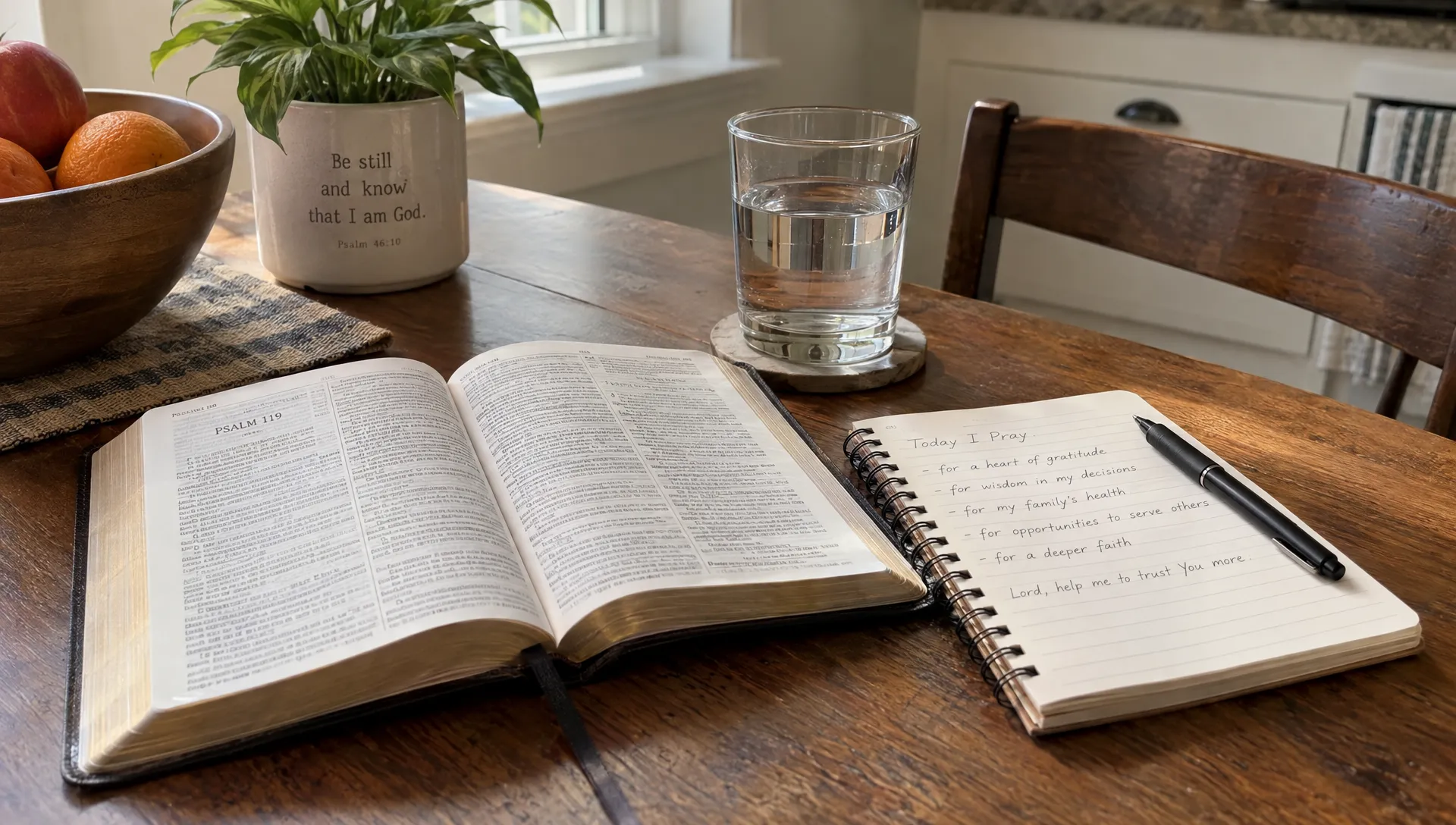
Make Room for Attention Without Demanding Perfect Quiet
Distractions are not always trivial. A crying child, an urgent work problem or concern about money may interrupt your reading. You do not have to remove every responsibility before you can pray.
Keep a scrap of paper nearby. When a task comes to mind, write it down and return to the passage. When a concern needs prayer, bring it to God rather than treating it only as an interruption.
For a small-business owner, worries about reaching customers may keep resurfacing. Practical help, such as website optimization and local SEO support, can be considered during a separate work-planning block. You can bring the worry to God now without trying to solve the entire marketing problem during your devotional time.
Meeting with God daily in the Bible does not require ignoring your responsibilities. It means giving Scripture your attention before allowing those responsibilities to direct every thought. On a crowded day, a few attentive minutes may be what you can offer.
When the Reading Feels Dry or You Miss a Day
A quiet time is not unsuccessful because you felt little. Scripture can correct your assumptions, deepen your understanding and strengthen your trust without producing an immediate emotional lift.
When a passage feels difficult, slow down. Reread the surrounding verses, use the cross-references in your Bible or ask a trusted pastor or mature Christian for help. Do not pressure yourself to uncover a profound personal insight every morning.
If you miss a day, return without creating a punishment plan. You do not need to read twice as much to regain God's attention. If consistency remains difficult, this guide to building a sustainable daily Bible reading habit addresses the practical side of getting started again.
Meeting with God daily in the Bible is a practice of dependence, not proof that you never struggle. Personal reading also belongs within the wider life of faith: worship, Christian fellowship and learning alongside other believers. You were not meant to understand and live out Scripture entirely alone.
Frequently Asked Questions
How long should I spend meeting with God each day? There is no biblical requirement for a specific number of minutes. Begin with enough time to read a short passage, understand its main point and pray honestly. Let the available time serve attention rather than become a scorecard.
Do I have to read in the morning? No. Mark 1:35 describes Jesus praying early, but it does not command every believer to follow that schedule. Choose a time when you can usually give Scripture your attention.
Where should I start reading? A Gospel such as Mark is a helpful starting point for following Jesus' ministry, teaching, death and resurrection. Read consecutive passages so you can follow the context rather than selecting verses at random.
What if I do not feel that God has spoken to me? Do not measure the value of reading by whether you receive a strong impression. Begin with what the passage actually teaches. Clear understanding, honest prayer and faithful obedience matter even when the experience feels ordinary.
Begin with One Passage Today
Open your Bible to Psalm 23 or a short passage in Mark. Ask God for understanding, read carefully and answer him in prayer. Carry one truth or faithful response into the next part of your day.
You do not need to perfect the whole practice before beginning. For ongoing Scripture-based encouragement as you meet with God daily in the Bible, explore Kingdom Signals and its weekly newsletter. Return to the text tomorrow, ready to listen again.