

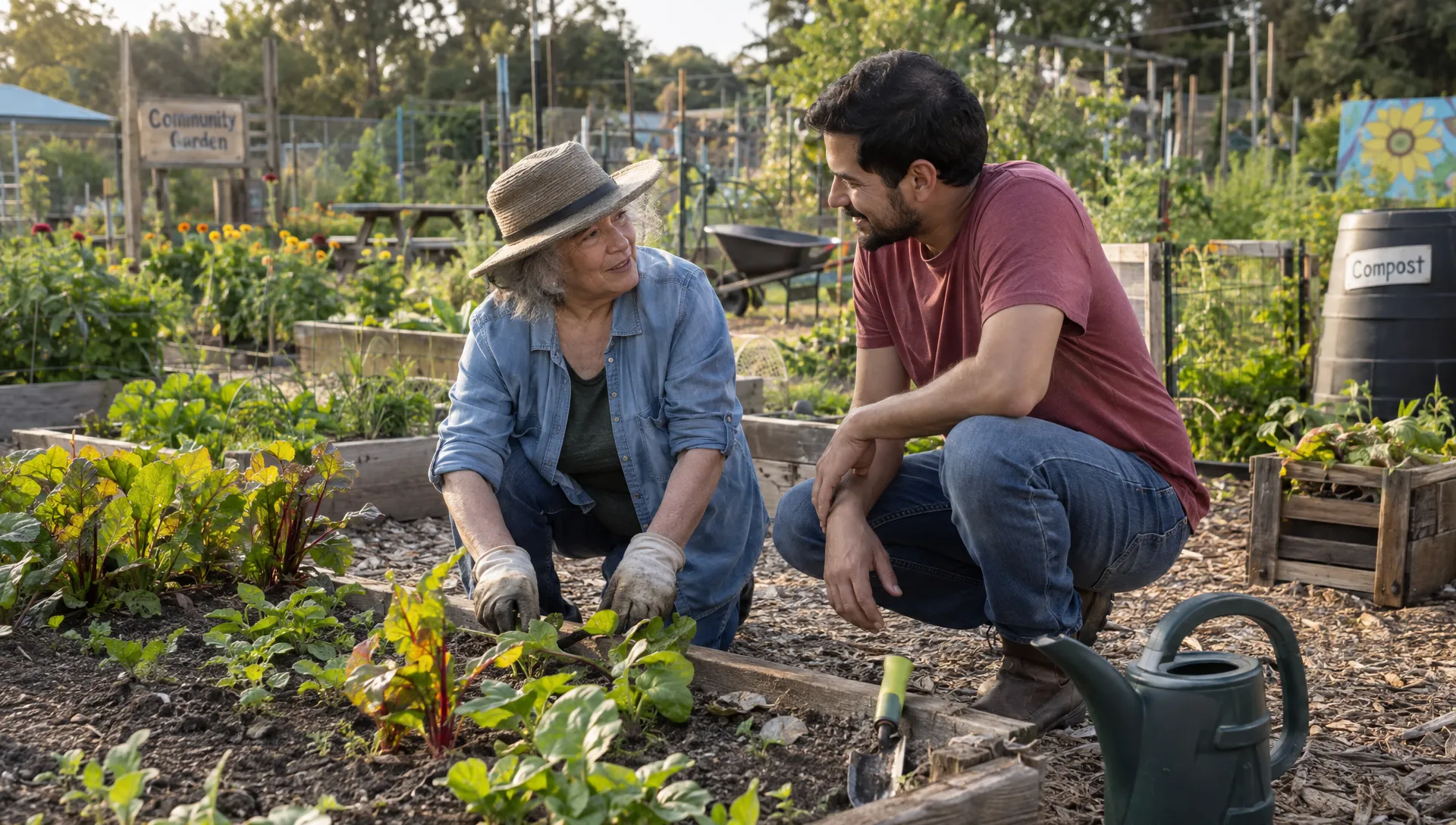
The work of God often begins where few people are looking: in a private prayer, an honest confession or the patient care of someone who cannot repay us. Those moments rarely look impressive. They may not produce a story worth sharing, much less an obvious change in circumstances.
That can be difficult when you want evidence that your life is moving forward. You may be raising children, caring for a relative, working an ordinary job or simply trying to remain faithful through a quiet season. It is easy to mistake a lack of recognition for a lack of significance.
Scripture gives us a different measure. God sees what others miss, and His purposes are not limited to what becomes public. Hidden faithfulness matters now, not only if it eventually leads to something larger.
The Work of God Is Not Measured by Visibility
When people ask Jesus what they must do to accomplish the works God requires, He directs them to believe in the one God has sent (John 6:28-29). Before considering our usefulness, we must begin with Christ. Christian faith is not a campaign to make ourselves valuable through visible achievements.
Ephesians 2:8-10 puts grace before good works. We are saved by grace through faith, not by earning acceptance. Good works follow as part of the life God gives us in Christ.
That order matters in an unnoticed season. You do not have to become impressive before your obedience matters. A small act of love does not purchase God's favor, but it can express a life already being shaped by His grace.
Jesus also teaches about giving and praying without seeking an audience in Matthew 6:1-6. His concern is not that all public service is wrong. It is that recognition must not become the reason we serve. The Father sees what happens beyond the reach of applause.
Hidden Beginnings in Scripture
David: A shepherd before he was a king
When Samuel comes to Jesse's household to anoint a king, David is not initially among the sons presented to him. He is tending the sheep (1 Samuel 16:1-13). The person overlooked in the gathering is the one God has chosen.
The work of God in David's story challenges the assumption that being noticed by people is necessary for being known by God. Psalm 78:70-72 later connects David's care of the flock with his calling to shepherd Israel.
This is not a formula promising that every overlooked person will receive a public position. David's calling was particular. The enduring lesson is that God does not judge as people do, and an ordinary responsibility is not beneath His attention.
Jesus: The ordinary years in Nazareth
Luke describes Jesus returning to Nazareth with Mary and Joseph, living in obedience to them and growing in wisdom and stature (Luke 2:51-52). Mark 6:3 records that people knew Him as a carpenter.
The Gospels do not give us a detailed account of those years. We should resist filling the silence with imagined conversations or elaborate claims about His daily routine.
What they do tell us is enough: the Son of God lived within a household and a local community before His public ministry. His ordinary years were not an embarrassing gap in the story of redemption.
That should make us cautious about treating domestic life, manual work or familiar responsibilities as spiritually inferior to a platform. Public ministry is not the only setting in which obedience belongs.
The growing seed: Activity beyond our understanding
In Mark 4:26-29, Jesus describes a man scattering seed. The man sleeps and rises while the seed grows, although he does not understand how the growth happens.
The parable concerns God's kingdom, not a guarantee that every personal ambition will eventually succeed. Still, it corrects our tendency to equate control with effectiveness.
The work of God is not confined to what we can monitor, explain or accelerate. There is a difference between participating faithfully and possessing complete knowledge of the outcome.
The farmer's limited understanding does not make the growth unreal. Likewise, believers can obey what God has made clear without claiming to know everything He is accomplishing. Trust leaves room for mystery without turning every unexplained event into a secret message.
What Hidden Faithfulness Can Look Like Today
Unseen obedience is often less dramatic than we expect. It may mean admitting that you were wrong without adding an excuse. It may involve keeping a promise after the initial enthusiasm has faded or praying for someone without telling them you prayed.
In a household, it can look like listening patiently when you would rather end the conversation. At work, it may involve correcting an error that no one else has noticed. In church, it could mean completing an unglamorous task without resenting the people whose roles receive more attention.
None of these actions guarantees an immediate emotional reward. Sometimes you will feel encouraged; sometimes you will simply be tired.
Recognizing the work of God in ordinary obedience means learning to value love, truthfulness and patience without demanding that each act produce a visible result. These are not consolation prizes for people without prominent callings. They belong to Christian discipleship itself.
Care that makes room for another person
Patient support offers a concrete example. Helping someone participate in work, learning or recreation often involves repetition, flexibility and attention that cannot be reduced to a quick success story.
The daytime program at Ons Plekske offers young people with intellectual disabilities and/or autism opportunities for work, study, sport and recreation. It illustrates what practical support can include: making room for people's interests and abilities within everyday activities.
For Christians serving in similar settings, the spiritual application is not to turn another person into a project or a testimony. It is to honor that person's dignity, listen to their preferences and provide dependable care.
The person receiving support is not a measure of the caregiver's success. Love pays attention to the individual, including when progress looks different from what someone else expected. Such service can be meaningful without becoming public.

Hidden Does Not Mean Harmful or Isolated
The biblical value of secret prayer must never become an excuse for secrecy that protects wrongdoing. Abuse, coercion and manipulation do not become holy because they happen behind closed doors.
Nor does faithfulness require remaining unsupported until you collapse. A caregiver may need respite. Someone facing depression may need professional care. A person experiencing abuse may need protection and help from appropriate services.
Trusting the work of God does not require calling every painful circumstance good or pretending that exhaustion is proof of devotion. Scripture includes lament, shared burdens and practical care for people in need.
Galatians 6:2 calls believers to carry one another's burdens. Hidden faithfulness can therefore include telling a trusted person the truth about your situation. Asking for help is not the opposite of trust.
There is also a difference between serving without applause and avoiding accountability. Private prayer is good; private claims of divine guidance still need testing against Scripture. A healthy church community can help us distinguish faithful perseverance from fear, unhealthy pressure or a responsibility we should share.
A Simple Practice for an Unseen Season
Instead of trying to decode every delay, begin with what Scripture already makes clear. You can love your neighbor, speak truthfully, pray honestly and seek help without first understanding the full meaning of your circumstances.
A short daily reflection can keep that focus practical:
- Receive: Read a brief Scripture passage slowly, attending to what it actually says rather than searching for a prediction.
- Name: Tell God where you feel overlooked, disappointed or impatient, without polishing the feeling into something more acceptable.
- Obey: Choose one concrete response, such as apologizing, keeping a commitment or offering appropriate help.
- Release: Entrust the outcome to God without requiring recognition as proof that the action mattered.
The work of God is not something you manufacture through a perfect devotional routine. These practices help you respond to grace, not control it.
If you need a broader framework for responding faithfully when God is moving in your life, begin with prayer, Scripture and wise counsel rather than urgency.
Over time, notice the direction of your character more than the size of your audience. Are you becoming more truthful? More willing to listen? More able to love without keeping score? These questions are often more useful than asking when your circumstances will become impressive.
Frequently Asked Questions
Does a hidden season mean God is preparing me for public ministry? Not necessarily. Scripture includes people called to public leadership, but it does not promise that every quiet season ends with a platform. God may call you to continue serving in familiar responsibilities. Those responsibilities do not need a more visible sequel to matter.
How can I recognize the work of God without guessing about every circumstance? Look first to what Scripture identifies as God's purposes: faith in Christ, growth in holiness, love for others and the fruit of the Spirit (Galatians 5:22-23). These provide a sounder basis for discernment than interpreting every coincidence as a message. Some circumstances will remain difficult to explain.
What if prayer feels dry and nothing seems to be changing? A lack of strong feeling does not establish that God is absent. Be honest about the dryness, keep your practices manageable and stay connected to supportive believers. This guidance on what to do when you feel spiritually dry can help you take a steady next step without forcing an emotional experience.
Should I keep every act of service private? No. Jesus warns against practicing righteousness for admiration, not against all visible service. Public work can encourage others and meet real needs. The question is whether love or recognition is directing your choices, and whether your service remains accountable.
A Prayer for Quiet Faithfulness
Father, You see the parts of my life that others do not. Help me receive Your grace before trying to prove my worth. Give me patience for ordinary responsibilities, courage to ask for help and love that does not depend on recognition. Teach me to trust You with what I cannot yet understand. Amen.
For weekly biblical reflections and practical faith encouragement, visit Kingdom Signals to explore the free guide and newsletter.