

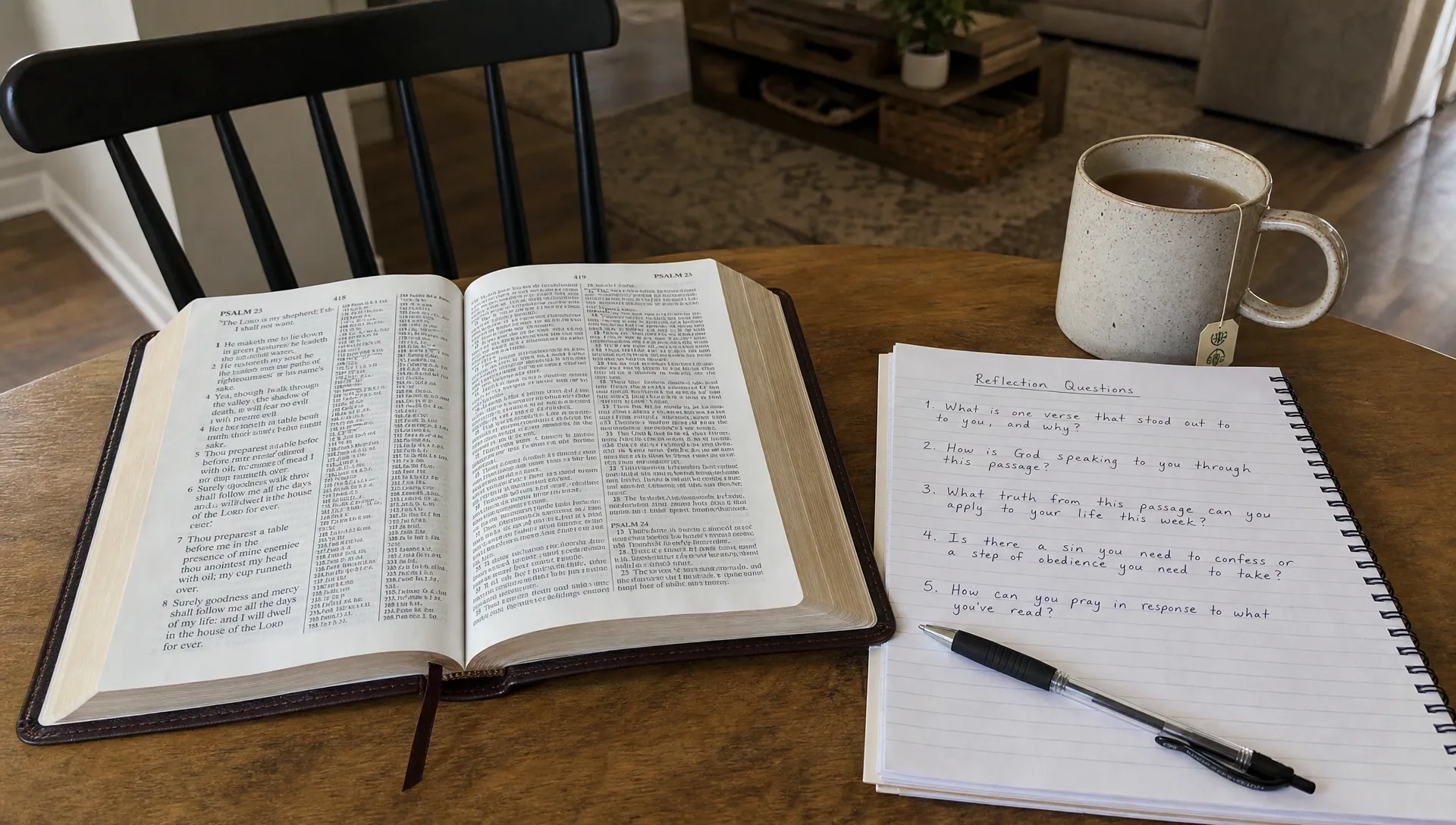
If your faith feels stretched right now, you are not alone and you are not disqualified. Many believers discover that spiritual growth does not begin with having stronger emotions. It often begins with asking better questions before God. Honest questions can uncover what is shaping your thoughts, where you are trusting your own control and how the Lord may be inviting you into deeper obedience.
The Bible does not treat faith as vague positivity. Hebrews 11:6 says that without faith it is impossible to please God, and Romans 10:17 says faith comes from hearing the word of Christ. That means the strongest questions are not centered on self-improvement alone. They lead us back to God’s character, God’s Word and God’s call. If you want a fuller foundation, Kingdom Signals has a helpful guide on the biblical meaning of faith.
1. What is shaping your faith right now?
Every soul is being formed by something. Your habits, entertainment, conversations, work rhythms, fears and private thoughts all have a discipling effect. The question is not whether you are being shaped. The question is what is doing the shaping.
Start by looking at your inputs. What do you reach for first in the morning? What voices have the most authority in your mind? What story do you keep telling yourself about God, your future or your limitations? This question is not meant to produce shame. It is meant to help you notice what has been feeding your inner life.
Some distractions call for repentance. Others call for better stewardship. If work has swallowed your attention, the answer may involve practical changes as well as prayer. For example, a believer leading an agency may explore AI operations support for marketing agencies to reduce operational clutter, but the deeper spiritual question remains: what will that recovered attention serve?
If your faith feels weak, do not only ask what you need to believe more strongly. Ask what you have been allowing to train your expectations. Psalm 1 describes the blessed person as one who delights in the law of the Lord and meditates on it day and night. Spiritual strength grows where the Word is given room to speak.
2. What do I believe about God in this situation?
A trial often exposes the difference between what we confess on Sunday and what we assume under pressure. We may say God is faithful, then live as if He is forgetful. We may say God is near, then interpret silence as abandonment. We may say God provides, then make fear our primary counselor.
This question brings the battle into the light: what am I believing about God right now? Not in theory, not in a Bible study answer, but in the actual place where you feel afraid, disappointed or impatient.
Your faith grows sturdier when it rests on God’s character rather than on the current appearance of your circumstances. Abraham had to trust God before the promise looked possible. David had to trust God while hiding from Saul. Mary had to trust God when obedience made her life more misunderstood, not less.
Try finishing this sentence in prayer: Lord, in this situation I am tempted to believe that You are... Then answer it with Scripture. If you are tempted to believe God is distant, bring Psalm 23, Psalm 139 or Matthew 28:20 before your own heart. If you are tempted to believe God is indifferent, sit with Romans 8:32. Faith is not strengthened by denying fear. It is strengthened by bringing fear under the truth of who God is.
3. Where is God calling me to obey before I feel ready?
Many Christians wait for confidence before obeying. Scripture often shows the reverse order: obedience opens the way for deeper confidence. Peter stepped out of the boat before he understood the storm. The servants at Cana filled the jars before seeing the wine. The Israelites stepped toward the Jordan before the waters parted.
This question is practical because faith always moves toward action. Is there an apology you have delayed? A habit you need to confess? A generous act you keep postponing? A boundary you need to set? A step of service you have talked about but not taken?
Sometimes your faith is strengthened through one clear act of obedience, not through endless analysis. James 2 does not teach that works replace faith. It teaches that living faith becomes visible through faithful action. Obedience does not earn God’s love. It responds to it.
If you feel stuck, choose the smallest faithful next step. Send the message. Open the Bible. Pray for the person you would rather avoid. Tell the truth. Turn off the temptation. Ask for help. Spiritual growth often looks less dramatic than we expect, but repeated obedience forms courage over time.
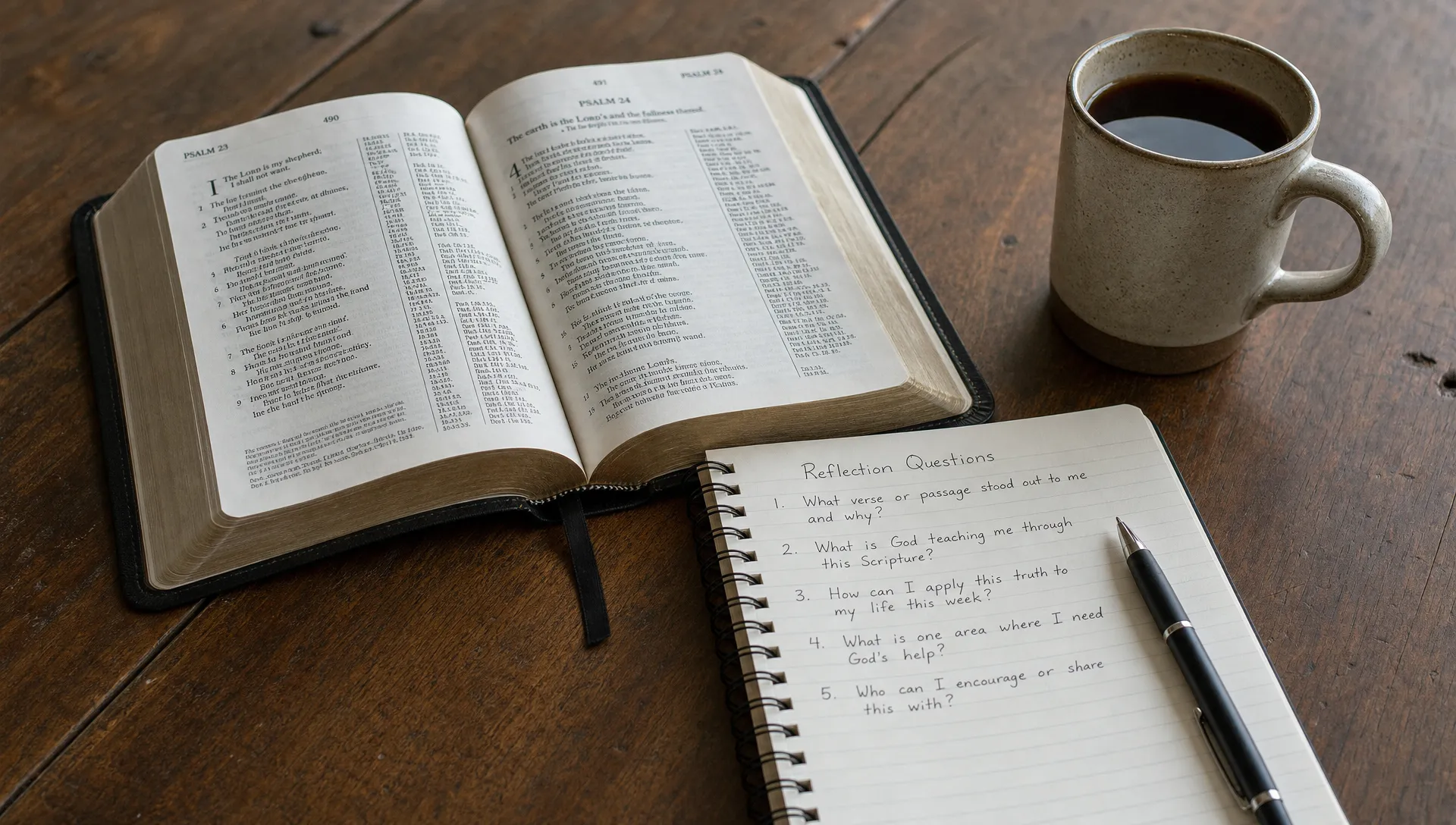
4. What am I carrying that God has asked me to surrender?
Some burdens are responsibilities. Others are weights God never assigned to you. Worry often disguises itself as care. Control often disguises itself as wisdom. Resentment often disguises itself as discernment. The Lord invites His people to carry real responsibility without carrying the illusion that everything depends on them.
First Peter 5:7 says to cast all your anxieties on God because He cares for you. That verse does not minimize pain. It gives pain a direction. The burden is not meant to stay locked inside your nervous system, your calendar or your imagination. It is meant to be brought to the Father.
One of the quiet ways God strengthens your faith is by asking you to release what you cannot control. That release may need to happen more than once. Surrender is rarely a single emotional moment. It is often a daily practice of naming the burden, telling the truth about your limits and entrusting the outcome to God again.
If anxiety has become a constant companion, you may find encouragement in this reflection on faith in an age of anxiety. The goal is not to pretend you are untouched by pressure. The goal is to learn how to bring pressure into communion with Christ.
5. Who is walking with me and who am I encouraging?
Faith is personal, but it was never designed to be private. The New Testament is filled with one another commands: encourage one another, bear one another’s burdens, confess to one another, forgive one another and stir one another up to love and good works. Isolation makes spiritual discouragement louder.
Ask who is close enough to tell you the truth in love. Who knows when you are drifting? Who can pray with you without turning your pain into gossip? Who helps you remember God when your own memory is tired?
Your faith was never meant to survive on occasional inspiration alone. God often strengthens believers through the ordinary ministry of other believers. A timely text, shared meal, honest confession or quiet prayer can become an instrument of grace.
This question also turns you outward. Who are you encouraging? Strength often returns as we serve. Not because service is a way to avoid our own wounds, but because love reorients us toward the Kingdom. When you strengthen someone else with Scripture, patience or presence, you often remember what is true for your own soul as well.
A simple way to practice these questions this week
Do not rush through all five questions as if they were a spiritual checklist. Take one each day, write a short answer and pray from that answer. The point is not to perform reflection perfectly. The point is to slow down long enough to let the Lord search you and lead you.
| Day | Question to pray through | Simple practice |
|---|---|---|
| Monday | What is shaping me right now? | Remove one noisy input and read one Psalm |
| Tuesday | What do I believe about God here? | Match one fear with one Scripture |
| Wednesday | Where is God calling me to obey? | Take one small faithful step |
| Thursday | What am I carrying that I need to surrender? | Name the burden aloud in prayer |
| Friday | Who is walking with me and who am I encouraging? | Reach out to one believer with honesty or encouragement |
This rhythm is simple enough for ordinary life, which is where discipleship usually happens. You do not need a perfect setting to seek God. You need a willing heart, an open Bible and enough honesty to pray what is actually true.
Frequently Asked Questions
How can questions strengthen your faith? Questions strengthen faith when they lead you back to God’s Word, expose false beliefs and move you toward obedience. The right questions do not replace Scripture. They help you bring your real life into the light of Scripture.
What if my answers reveal doubt? Doubt brought honestly to God is not the same as rebellion. In Mark 9:24, a desperate father prayed, I believe; help my unbelief. That is a faithful prayer. God is not surprised by weakness, and He invites you to bring it to Him rather than hide it.
Should I ask these questions alone or with someone else? Both can be helpful. Private reflection allows for honesty before God. Trusted Christian community adds encouragement, accountability and perspective. If a question uncovers deep pain, ongoing fear or destructive patterns, invite a mature believer, pastor or counselor into the process.
How often should I use these questions? Use them whenever you sense spiritual drift, pressure or confusion. They can also become a weekly review practice. A few minutes of prayerful reflection each week can help you notice where God is teaching, correcting and sustaining you.
Keep listening for the signal of the Kingdom
Faith is strengthened over time through hearing God’s Word, trusting His character and responding with obedience in ordinary places. These five questions will not remove every struggle, but they can help you stop drifting and start listening with greater clarity.
For weekly biblical encouragement, devotional reflections and practical guidance for everyday discipleship, visit Kingdom Signals. Let the questions become a doorway, not into self-focus, but into deeper trust in the God who is already at work in you.