

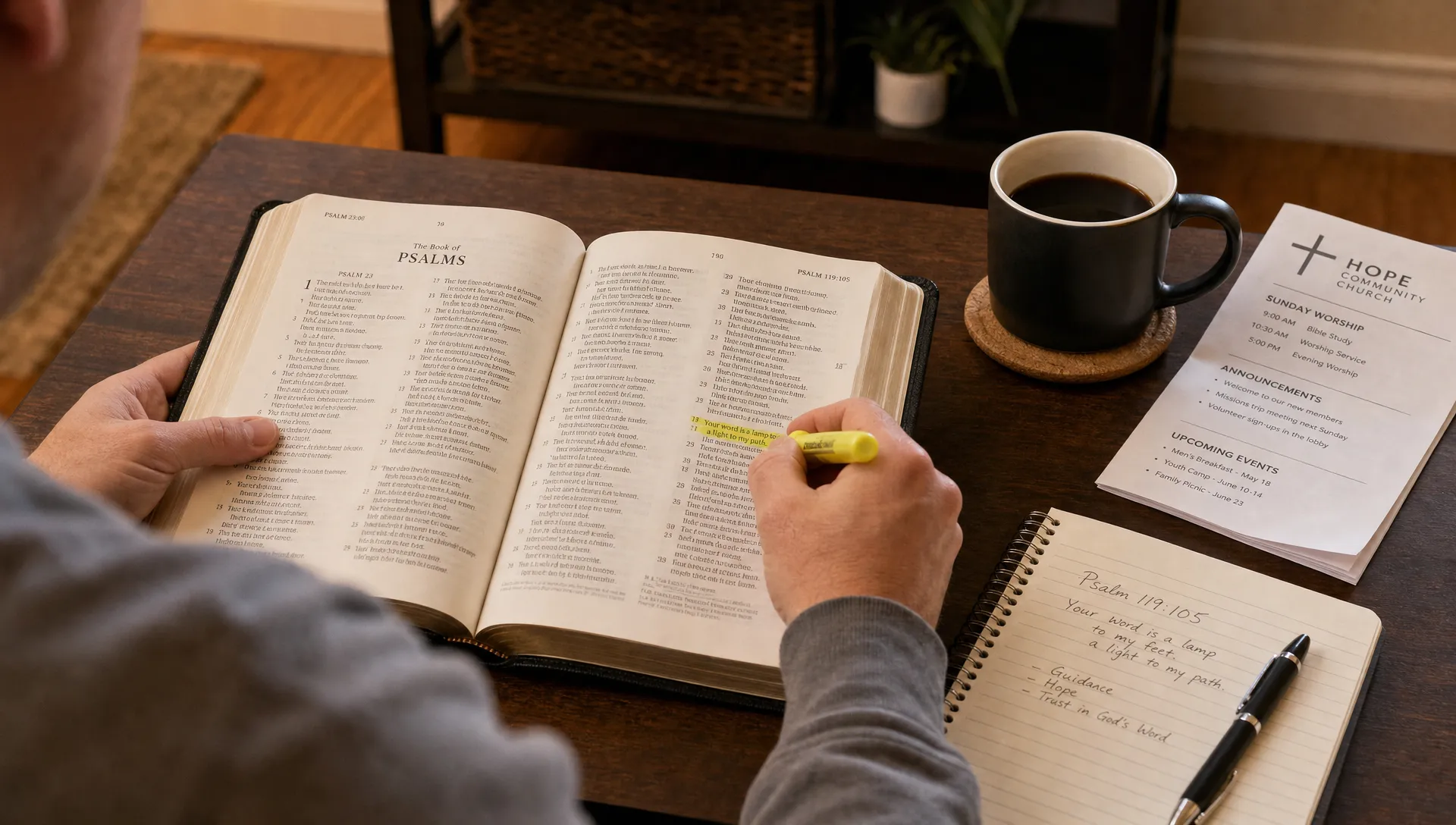
When people search for “faith meaning biblical,” they are usually asking something deeper than a dictionary question. They want to know what Scripture means when it says we are saved by faith, walk by faith, live by faith and please God by faith. The Bible does not present faith as vague positivity, blind religion or pretending everything is fine. Biblical faith is a whole-person trust in God that receives His Word, rests in His character and responds with obedience.
That matters because faith is central to Christian life. Hebrews 11:6 says, “without faith it is impossible to please him,” and Romans 10:17 says faith comes from hearing the word of Christ. If faith is misunderstood, discipleship becomes distorted. If faith is understood biblically, it becomes the foundation for peace, endurance, repentance, prayer and love.
faith meaning biblical: a Scripture-Shaped Definition
The most concise biblical definition is found in Hebrews 11:1: “Now faith is the assurance of things hoped for, the conviction of things not seen.” That verse does not mean faith ignores reality. It means faith treats God’s promise as more reliable than what the eye can measure in the moment.
A clear faith meaning biblical definition must hold together three ideas: trust, confidence and allegiance. Faith trusts God personally, not merely an idea about God. Faith has confidence because God has spoken. Faith also includes allegiance because the God we trust is King, not a religious accessory.
In Scripture, faith is relational before it is theoretical. Abraham “believed the Lord” in Genesis 15:6, and that belief was credited to him as righteousness. He did not know every detail of the future, but he trusted the One who called him. The same pattern runs throughout the Bible: God speaks, people trust Him, and that trust changes how they live.
Faith Is Trust in God’s Character, Not Trust in Your Feelings
Many believers assume they have weak faith because their emotions feel unstable. Scripture gives a more honest picture. The Psalms include fear, grief, confusion and complaint, yet they often turn those emotions toward God rather than away from Him. Biblical faith does not require emotional calm at every moment. It requires bringing the whole self under the truth of who God is.
The phrase faith meaning biblical also protects us from confusing faith with self-confidence. Christian faith is not confidence that we can force an outcome. It is confidence that God is faithful, wise, holy and good, even when the outcome is not yet visible.
This is why biblical faith can coexist with tears. A Christian may pray with trembling hands and still be praying in faith. A believer may say, like the father in Mark 9:24, “I believe; help my unbelief!” and still be moving toward Jesus rather than away from Him.
If anxiety is part of your struggle, Kingdom Signals has a deeper reflection on faith in an age of anxiety that explains why feeling anxious does not mean God has rejected your faith.
What Biblical Faith Is Not
The Bible’s view of faith becomes clearer when we name common counterfeits. These distortions often sound spiritual, but they eventually produce guilt, pressure or shallow religion.
| Common misunderstanding | Biblical correction | Helpful Scripture |
|---|---|---|
| Faith is wishful thinking | Faith is confidence in what God has revealed | Hebrews 11:1 |
| Faith is mental agreement only | Faith trusts God in a way that bears fruit | James 2:17 |
| Faith is a way to control God | Faith submits to God’s will and wisdom | Luke 22:42 |
| Faith means never struggling | Faith can cry out to God from weakness | Mark 9:24 |
Notice that biblical faith is not anti-intellectual. The apostles appealed to eyewitness testimony, fulfilled Scripture and the resurrection of Jesus. Faith is not believing without reason. It is trusting the trustworthy God who has made Himself known.
If your goal is faith meaning biblical rather than generic spirituality, the distinction matters. A person can believe that God exists and still refuse to trust Him. James 2:19 says even demons believe that God is one, yet that belief does not save them. Saving faith receives Christ, depends on His grace and yields itself to His lordship.
Faith and Works: How Obedience Fits Without Becoming Legalism
Ephesians 2:8-9 is one of the clearest passages in the New Testament: “For by grace you have been saved through faith. And this is not your own doing; it is the gift of God.” Salvation is not earned by religious performance. It is received by faith because of God’s grace in Christ.
But the next verse matters too. Ephesians 2:10 says believers are created in Christ Jesus for good works. In other words, works are not the root of salvation, but they are the fruit of living faith.
James makes the same point from another angle. “Faith by itself, if it does not have works, is dead” (James 2:17). James is not arguing that we earn acceptance before God. He is exposing a lifeless claim of belief that never moves the heart, mouth, hands or habits.
This is where many believers feel tension. They know they are saved by grace, but they also know Scripture calls them to obedience. The answer is not to minimize obedience. The answer is to keep obedience in the right place. We obey because we trust God, not because we are trying to purchase His love.
Faith Grows Through Hearing, Remembering and Responding
Romans 10:17 says, “faith comes from hearing, and hearing through the word of Christ.” Faith grows as God’s Word becomes more central than fear, hurry, cultural noise or private assumptions. That growth is often slow and ordinary rather than dramatic.
Seen this way, faith meaning biblical is not less practical than everyday advice. It is more practical because it reaches the level of worship, motive and desire. Scripture trains us to interpret life through God’s promises rather than through pressure alone.
A few practices help faith take root in daily life:
- Read Scripture with the question, “What does this reveal about God?”
- Pray honestly rather than performing spiritual confidence.
- Remember past evidence of God’s faithfulness.
- Obey the next clear command instead of demanding the whole future.
- Worship with the church so your faith is strengthened by the body of Christ.
Faith also matures through waiting. Abraham waited. Joseph waited. David waited. The disciples waited between the cross and the resurrection. If this is an area where you feel stretched, the Kingdom Signals article on why faith requires patience gives a fuller biblical picture of how God forms trust over time.
Faith in Jesus Christ Is the Center
Biblical faith is not merely faith in faith. It has an object, and the center is Jesus Christ. John 3:16 says that whoever believes in the Son has eternal life. Romans 3:22 speaks of “the righteousness of God through faith in Jesus Christ for all who believe.”
For anyone asking faith meaning biblical while trying to understand Christianity, this is the heart of the answer: faith is receiving and relying on Christ. It is not admiring Jesus from a distance. It is entrusting yourself to Him as Savior, Lord, Teacher and King.
That kind of faith includes repentance. To trust Christ is to turn from self-rule and sin, not perfectly in one instant, but truly. The Christian life is then a lifelong walk of returning to Him, learning His ways and being conformed to His image.
This is why faith changes ordinary days, not just religious moments. It changes how you speak to your family, handle money, respond to disappointment, forgive people and make decisions when no one is watching. Kingdom Signals explores this daily dimension in how living faith changes the way you face ordinary days.
How to Examine Your Faith Without Falling Into Fear
Scripture does call believers to self-examination, but not as a path into spiritual panic. Second Corinthians 13:5 says, “Examine yourselves, to see whether you are in the faith.” The purpose is not endless introspection. The purpose is honest alignment with Christ.
A healthy examination asks better questions than “Do I feel strong today?” Feelings rise and fall. Instead, ask: Am I trusting Christ or my own righteousness? Am I willing to obey God’s Word when it confronts me? Do I grieve sin and return to the Lord? Is there any fruit of love, humility, repentance or perseverance?
The biblical pattern is not perfection, but direction. Peter denied Jesus, yet he wept, returned and was restored. Thomas doubted, yet he stayed near enough to encounter the risen Christ. Weak faith can be real faith when it clings to a strong Savior.
Frequently Asked Questions
What is the shortest faith meaning biblical definition? Biblical faith is trusting God’s character, believing His Word and responding to Him with obedient reliance, especially through faith in Jesus Christ.
Is faith the same as belief? In Scripture, faith includes belief but goes beyond bare agreement. Biblical faith involves trust, dependence and allegiance that affect how a person lives.
Does having doubts mean I do not have faith? Not necessarily. Doubt can be a struggle within faith, especially when you bring your questions to God. Persistent unbelief rejects God, but honest weakness can still cry out, “help my unbelief.”
Are we saved by faith or by works? The Bible teaches that we are saved by grace through faith, not by works. Good works follow as the fruit of genuine faith, not the price of salvation.
How can I grow in faith? Faith grows through hearing God’s Word, prayer, obedience, worship, remembrance and perseverance. Growth is often gradual, but God uses ordinary faithfulness to deepen trust.
Keep Learning to Live by Faith
If this faith meaning biblical guide helped clarify what Scripture teaches, keep returning to the Bible’s central invitation: trust the God who has revealed Himself in Jesus Christ. Faith begins by receiving His grace, and it continues as you learn to walk with Him in ordinary obedience.
For weekly biblical insight, devotional encouragement and practical guidance for living with a Kingdom perspective, you can subscribe to the Kingdom Signals newsletter and download the free guide at Kingdom Signals. Let Scripture keep shaping not only what you believe, but how you live.