

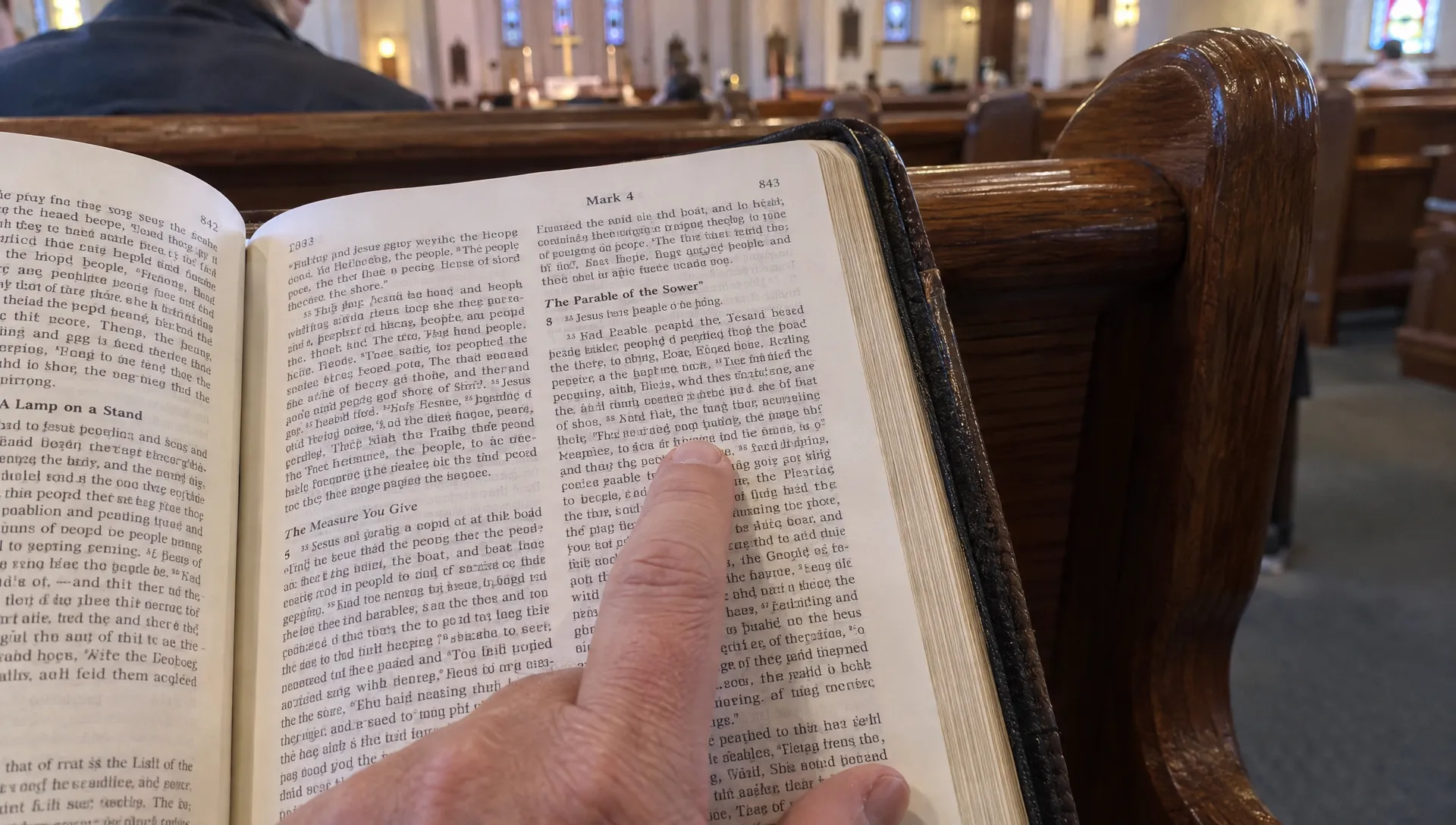
You want to grow in the Bible, but opening it can bring more questions than clarity. Where should you start? How much should you read? What happens when a passage makes no sense? Those questions do not mean you lack faith. They mean you need an approach that leaves room to learn.
You do not have to understand every book before Scripture can shape your life. Begin with a manageable passage, learn to read it in context and let understanding develop over time.
Begin with Grace, Not a Reading Score
Bible study is not an entrance exam for God’s love. Ephesians 2:8–9 teaches that salvation comes by grace through faith, not through works. Your reading record does not purchase acceptance with God.
That matters because overwhelm often starts with an unspoken rule: a serious Christian should already know more. You compare yourself with a pastor, a longtime believer or someone whose Bible is covered in notes. Their knowledge becomes your deadline.
Replace that deadline with a learning posture. You can take Scripture seriously without demanding immediate mastery. Second Peter 3:15–16 even acknowledges that some things in Paul’s letters are difficult to understand. Difficulty is not proof that you are doing everything wrong.
Approach your next reading as someone invited to learn, not someone trying to prove spiritual competence.
How to Grow in the Bible One Passage at a Time
For a beginner or a returning reader, the Gospel of Mark is a reasonable starting place. It follows Jesus’ ministry, teaching, death and resurrection through a relatively compact narrative. Other books can also serve you well, but choosing one removes the daily pressure of deciding where to turn.
Read a complete scene or paragraph rather than selecting an isolated sentence. Chapter numbers, verse numbers and section headings help you navigate, but they do not always mark the boundaries of a thought.
For example, Mark 4:35–41 contains the account of Jesus calming a storm. Reading the whole scene gives you the setting, the disciples’ fear, Jesus’ response and their closing question about his identity.
Give yourself permission to stay with that passage. Returning to it is not falling behind. You may notice a detail on the second reading that you missed on the first.
If choosing a regular time is your main obstacle, Kingdom Signals’ guide to building a daily Bible reading habit addresses consistency. Here, the goal is different: reducing the mental load of understanding what you read.
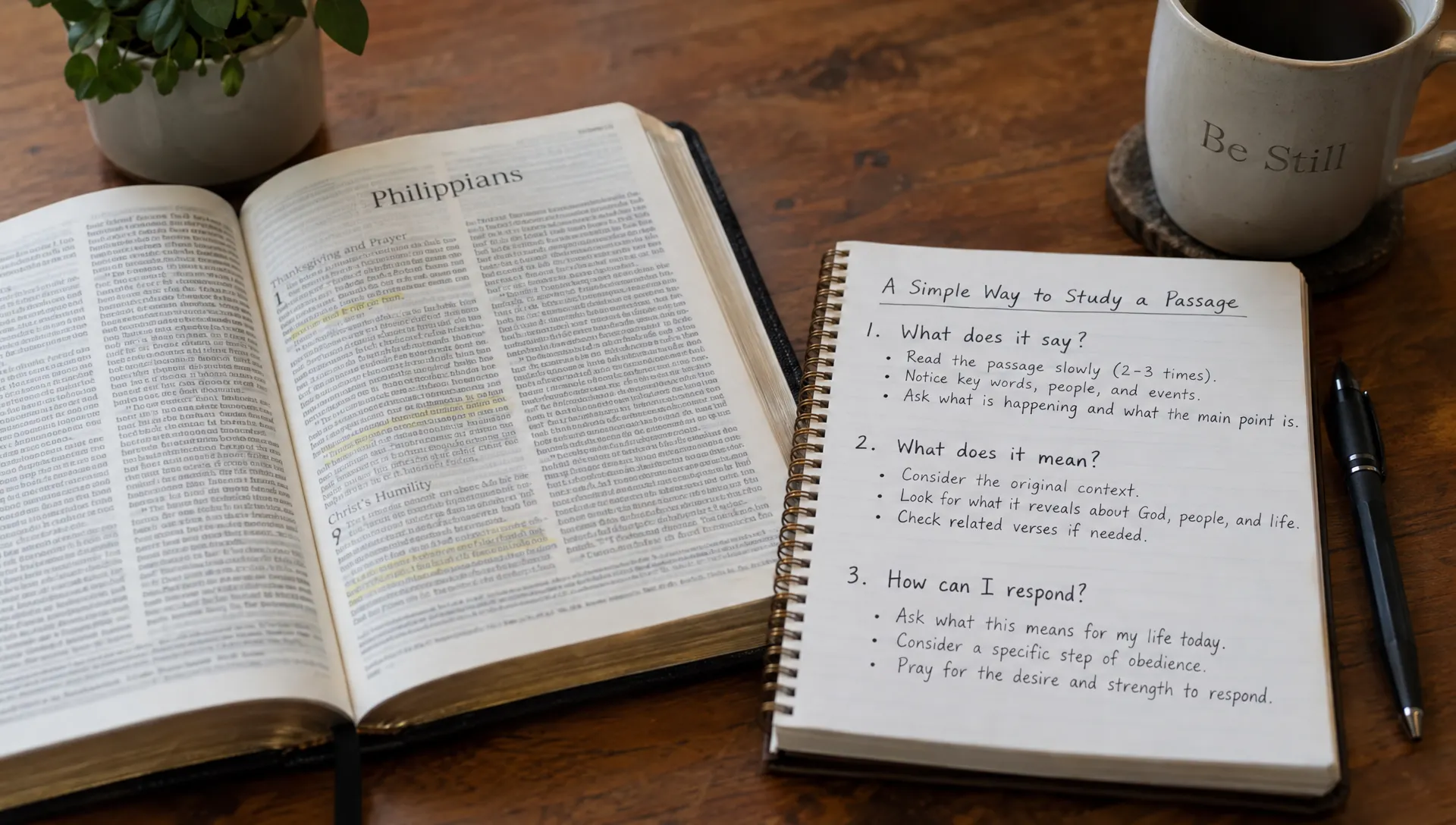
Separate Reading into Three Simple Questions
What does the passage actually say?
To grow in the Bible without overload, begin with observation rather than trying to produce a profound insight. Identify who is speaking, what happens and which words or ideas receive emphasis.
Write one plain sentence describing the passage. For Mark 4:35–41, you might write: “Jesus calms a storm, challenges the disciples’ fear and leaves them asking who he is.” That summary stays close to the text.
Notice what you do not understand, too. A question in your notebook is useful work. You do not have to solve it before moving to the next step.
What does it mean in context?
Look at the surrounding paragraphs. Ask how this scene or argument connects with what comes before and after it. Then consider the kind of writing you are reading: a poem, a historical account, a letter or another literary form.
A proverb usually expresses wisdom about how life works, not an unconditional guarantee about every individual outcome. A letter addresses particular readers and circumstances, even when its teaching also applies more broadly. These distinctions help prevent avoidable confusion.
When you get stuck, consult one trustworthy study resource or ask a mature Christian who can explain their reasoning from the passage. Acts 8:30–35 shows Philip helping an Ethiopian reader understand Scripture. Receiving help is part of learning, not a failure of personal devotion.
What faithful response follows from that meaning?
Application comes after understanding, not instead of it. Ask whether the passage calls you to trust, repentance, gratitude, obedience or a clearer understanding of God.
As you grow in the Bible, resist turning every passage into a list of tasks. Some passages primarily deepen worship or correct an assumption. Others contain direct commands that require action.
Choose one response that genuinely follows from the text. It might be confessing a dishonest statement, thanking God for mercy or asking for help with a fear you have been hiding. Keep the response specific enough to recognize, but do not manufacture an instruction the passage does not give.
A Worked Example: Jesus Calms the Storm
Here is how those questions work together in Mark 4:35–41:
| Step | What to notice | A useful note |
|---|---|---|
| Observation | The disciples are afraid, Jesus stills the storm and they question his identity. | “The scene moves from fear of the storm to awe at Jesus.” |
| Meaning | Jesus demonstrates authority over wind and sea while questioning the disciples’ lack of faith. | “This account reveals Jesus’ authority and exposes the disciples’ limited understanding.” |
| Response | Bring fear honestly to Jesus and consider where you struggle to trust him. | “I can pray about my fear without pretending it is absent.” |
Notice the boundary: this passage does not promise that Christians will never experience danger or that every crisis will end immediately. A comforting application must still respect what the text actually says.
You also do not need to discover every theological connection in one sitting. A clear observation, a responsible understanding and an honest response make a worthwhile beginning.
Give Each Resource a Specific Job
To grow in the Bible, you need help you can use, not an unlimited collection of material. Start with one readable translation. Add a study Bible or introductory commentary when a particular question requires explanation.
A small process can reduce the temptation to do everything at once. In a very different field, BKL’s engineering process moves from defining requirements toward commissioning a finished product. The limited comparison is useful: distinct stages have distinct jobs. You do not need to perform every stage simultaneously.
For Bible study, reading tells you what the passage says. Context helps you understand it. A reference tool addresses a specific uncertainty. Prayer helps you respond honestly to God.
Before opening another resource, name your question: “Who is speaking?” or “What does this unfamiliar word mean here?” Searching for one answer is usually more manageable than consuming several general explanations.
If study notes disagree, record the disagreement and seek help. Not every question needs a same-day conclusion.
Match the Session to Your Present Capacity
A demanding season may require a smaller study session. Parenting, illness, grief and exhausting work can limit attention. A smaller session is not automatically a smaller expression of faithfulness.
You can still grow in the Bible when your capacity is limited. Read one complete paragraph, summarize its central thought and pray about what you understood. If you have more energy, explore its context or investigate a question. If you do not, stop without turning the limit into a moral verdict.
When you miss a planned reading, resume rather than assigning yourself a backlog. Catch-up pressure can turn a helpful plan into something you avoid.
Also distinguish confusion from spiritual dryness. You may understand a passage and still feel emotionally flat. A lack of strong feeling does not automatically mean a lack of learning or faith. Kingdom Signals’ reflection on what to do when you feel spiritually dry offers encouragement for that experience.
Persistent distress or exhaustion may also call for pastoral support, practical help or appropriate professional care, not simply a more demanding devotional routine.
Look for Understanding and Faithfulness, Not Just Volume
After a few weeks, review what you have learned rather than only counting chapters. Can you describe the main point of a passage? Are you noticing when a verse has been taken out of context? Have you brought a real question to a trusted believer?
These are useful signs of learning. So are concrete responses such as making an apology, reconsidering an assumption or praying more honestly. None of them requires a dramatic emotional experience.
As you grow in the Bible, knowledge and lived faith belong together. Second Timothy 3:16–17 connects Scripture with teaching, correction and preparation for good works. Understanding matters because it equips you to live faithfully, not because it gives you something to display.
For the next step beyond comprehension, explore how to let the Bible shape your life. Keep your reflection specific: identify one thing you understand more clearly and one response you want to practice. Avoid grading your entire spiritual life after every session.
Frequently Asked Questions
Where should I start if I know very little about the Bible? A Gospel such as Mark is a useful starting point because it introduces Jesus through connected accounts of his ministry. Read complete scenes and ask someone trustworthy about unfamiliar names, customs or ideas.
How long should a Bible study session take? There is no universal minimum. Choose enough time to read a manageable passage attentively. A brief session with a clear focus can be more useful than a long session spent rushing or switching between resources.
Can I grow in the Bible if I forget much of what I read? Yes. Forgetting does not make reading pointless. Revisit passages, write a short summary and discuss what you are learning. Aim for developing understanding rather than immediate recall of every detail.
What if I cannot understand a verse? Read the surrounding passage, check the book’s context and consult a reliable resource or mature Christian. Leave difficult questions open when necessary. Do not force an interpretation simply to finish your notes.
Choose One Passage for Your Next Reading
Your next step does not need to be a new yearlong plan. Choose one complete passage, read it carefully and write down one observation and one question. Pray honestly about what you understand.
For ongoing support, Kingdom Signals offers weekly biblical insights, devotional reflections and a free guide. Subscribe to the newsletter for encouragement as you continue learning Scripture at a manageable pace.