

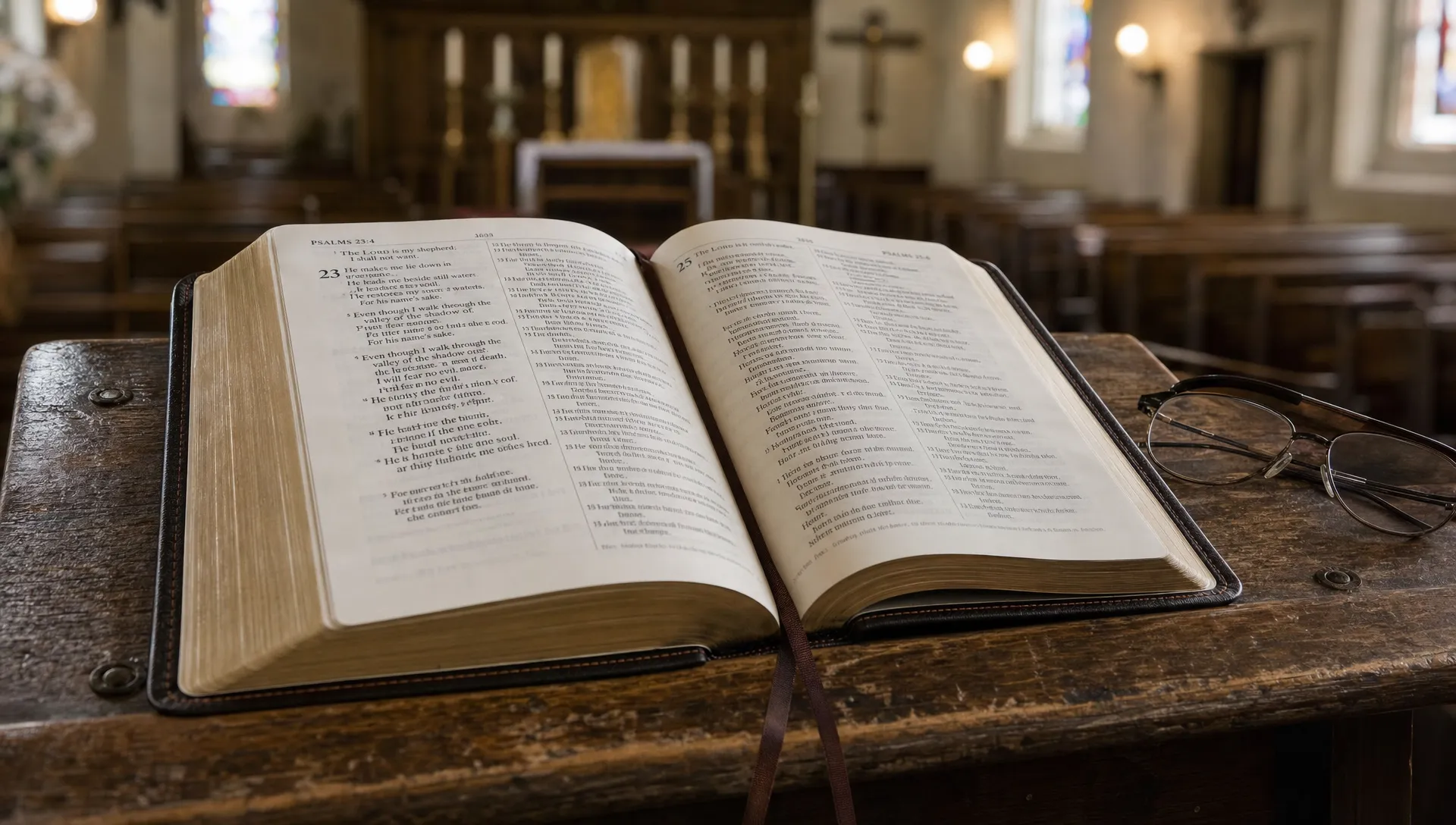
When people type “scripture who god is” into a search bar, they are usually asking for more than a list of verses. They want to know whether God can be trusted, whether He is near and what the Bible actually says about His character.
Scripture does not leave God vague. From Genesis to Revelation, God reveals Himself through His names, His actions, His promises and ultimately through Jesus Christ. This matters because Christian faith is not built on a spiritual feeling or a private guess. It is built on the God who has spoken.
If you want your reading of the Bible to shape more than your knowledge, Kingdom Signals has a helpful guide on letting the Bible shape your life. The goal is not merely to collect verses, but to meet the Lord those verses reveal.
Why the search for “scripture who god is” matters
Many people approach the Bible looking for answers to immediate questions: What should I do? Why am I suffering? Will God help me? Those are honest questions, but Scripture often answers them by first showing us who God is.
The Bible’s revelation of God gives weight to every command, comfort and promise. If God is holy, His commands are not arbitrary. If God is faithful, His promises are not empty. If God is merciful, repentance is not a dead end. If God is Father, prayer is not shouting into the dark.
Knowing God also protects us from reshaping Him into our preferences. We may want a God who approves everything, fixes everything quickly or never confronts us. Scripture gives us someone better: the living God who is truthful, gracious and unchanging.
God reveals Himself as eternal and holy
The first thing Scripture teaches is that God is not one being among many. He is the eternal Creator. In Genesis 1, God speaks creation into existence. Before there are stars, seas, nations or human stories, God is already there.
In Exodus 3:14, when Moses asks for God’s name, the Lord answers, “I AM WHO I AM.” This is not a slogan. It reveals that God’s existence depends on no one outside Himself. He is not sustained by creation, history or human belief.
The phrase “scripture who god is” should lead us first to God’s self-revelation, not our assumptions. Isaiah 6 shows the prophet overwhelmed by God’s holiness as the seraphim cry, “Holy, holy, holy is the LORD of hosts.” Holiness means God is utterly pure, set apart and morally perfect.
That can feel intimidating, but it is also good news. A holy God is not corrupt, careless or unstable. His justice is clean. His motives are pure. His glory is not vanity, but the radiance of perfect goodness.
God is merciful, gracious and faithful
One of the clearest descriptions of God appears in Exodus 34:6-7, where the Lord proclaims Himself as merciful, gracious, slow to anger and abounding in steadfast love and faithfulness. This moment comes after Israel’s rebellion with the golden calf, so the context matters. God reveals mercy where judgment would have been deserved.
Psalm 103 echoes this same truth: “The LORD is merciful and gracious, slow to anger, and plenteous in mercy.” David does not describe God as indulgent or indifferent to sin. He describes a God whose compassion is deep enough to forgive and whose righteousness is strong enough to heal what sin has broken.
A search for “scripture who god is” should not end with a single attribute. God is not partly holy and partly loving, as if those qualities compete. His holiness is loving, His love is holy and His mercy never requires Him to become unjust.
| What Scripture reveals | Key passages | What it teaches about God |
|---|---|---|
| God is Creator | Genesis 1:1, Psalm 24:1 | Everything belongs to Him and depends on Him |
| God is holy | Isaiah 6:1-5, 1 Peter 1:15-16 | He is pure, set apart and worthy of worship |
| God is merciful | Exodus 34:6-7, Psalm 103:8-14 | He forgives, restores and shows compassion |
| God is faithful | Deuteronomy 7:9, Lamentations 3:22-23 | His covenant love does not fail |
| God is near | Psalm 34:18, Matthew 28:20 | He draws close to the broken and remains with His people |
| God is Father | Matthew 6:9, Romans 8:15 | Believers are invited into trust, prayer and adoption |
God is near to the brokenhearted
The God of Scripture is high and exalted, but He is not distant from pain. Psalm 34:18 says the Lord is near to the brokenhearted and saves the crushed in spirit. That means God’s greatness does not make Him inaccessible. His majesty does not cancel His tenderness.
This is especially important in seasons when God feels hidden. Scripture repeatedly shows God drawing near to people in wilderness places: Hagar in Genesis 16, Elijah in 1 Kings 19, David in the Psalms and the disciples in their fear after the crucifixion.
If loneliness has made God feel far away, you may find encouragement in this reflection on trusting that God is there when you feel alone. The Bible does not deny the ache of loneliness, but it gives believers language to pray through it.
God’s nearness also corrects a common misunderstanding. He is not only present when emotions are strong or circumstances are easy. He is present because He is faithful to His covenant promises.

Jesus is the clearest revelation of God
The New Testament makes a stunning claim: if you want to know what God is like, look to Jesus Christ. John 1:18 says that no one has seen God, but the only Son has made Him known. Colossians 1:15 calls Christ “the image of the invisible God,” and Hebrews 1:3 says He is the exact imprint of God’s nature.
Every search for “scripture who god is” eventually leads to Jesus, not as a footnote, but as the fullest revelation of the Father. When Jesus welcomes sinners, touches lepers, confronts hypocrisy, calms storms and weeps at Lazarus’s tomb, He is showing us the heart of God.
This does not mean Jesus is softer than the Father. In John 14:9, Jesus tells Philip, “Whoever has seen me has seen the Father.” The Son does not improve the Father’s image. He reveals it perfectly.
The cross brings God’s character into sharp focus. At Calvary, we see holiness that does not ignore sin, love that gives itself, justice that is satisfied and mercy that reaches guilty people. The resurrection then declares that God’s life is stronger than death.
God is Lord of ordinary life
The Bible does not reveal God so we can admire Him from a distance. Scripture reveals God so we can worship, trust and obey Him in daily life. Colossians 3:17 says that whatever believers do, in word or deed, should be done in the name of the Lord Jesus.
That means God’s character touches prayer, work, money, relationships, speech, rest and even ordinary habits of stewardship. When “scripture who god is” becomes more than a search query, it begins to shape how we spend, serve and make decisions.
Christian faith does not require turning every small choice into a dramatic spiritual test. Still, the Lordship of God includes ordinary embodied life, from how we eat and dress to how we shop with gratitude and wisdom. That can include basic purchases like woven cotton boxer shorts just as much as books, groceries or household items, because all of life is lived before God.
This is not about making everyday things overly religious. It is about refusing to divide life into “spiritual” and “unspiritual” categories. The God who created bodies, time, work and material things calls His people to receive ordinary gifts with thankfulness and use them with integrity.
How to read these Scriptures faithfully
When reading Bible passages about who God is, avoid lifting one verse out of context and building a whole picture from it. The Bible gives a unified revelation, but it unfolds across many books, genres and moments in redemptive history.
Start with the passage itself. Who is speaking? What is happening? Is the text a prayer, prophecy, narrative, teaching or song? Then ask how the passage fits the larger story of Scripture, especially how it points toward God’s covenant faithfulness and the revelation of Christ.
If you are learning to recognize God’s leading, Scripture remains the primary measure. This article on hearing God’s voice in daily life can help you discern His guidance without separating it from the Bible.
A faithful reading also welcomes tension. God is both transcendent and near. He is both Judge and Savior. He is both King and Father. The goal is not to flatten those truths into something easier, but to worship the God who is greater than our categories.
A simple practice for meditating on who God is
If you came here searching “scripture who god is,” choose one passage and stay with it long enough to let it form your prayers. You do not need to rush through twenty verses in one sitting.
Try this simple rhythm:
- Read one passage slowly, such as Exodus 34:6-7, Psalm 103, John 1:1-18 or Hebrews 1:1-4.
- Name one truth the passage reveals about God.
- Turn that truth into worship, confession, trust or obedience.
- Ask where your life currently resists that truth.
- Carry one phrase with you through the day.
For example, if you read Psalm 103 and see that God is compassionate, you might pray, “Father, teach me to receive Your compassion instead of hiding in shame.” If you read Isaiah 6 and see that God is holy, you might confess sin honestly and ask for a cleansed heart.
Meditation is not emptying your mind. Biblical meditation fills the mind with truth so the heart can respond to God rightly.
Frequently Asked Questions
What is the best Scripture for understanding who God is? Exodus 34:6-7 is one of the clearest Old Testament descriptions of God’s character. John 1:18, Colossians 1:15 and Hebrews 1:3 show that Jesus Christ is the fullest revelation of God.
Does the Bible describe God as loving or holy? Scripture describes God as both loving and holy. These attributes do not conflict. God’s love is pure and His holiness is never cold or loveless.
How can I know God better through Scripture? Read slowly, pay attention to context and turn what you see into prayer. Look for God’s actions, names, promises and character, then ask how the passage points to Christ.
Why does God sometimes feel hidden if Scripture says He is near? Feelings of distance can come through grief, sin, waiting, exhaustion or spiritual testing. Scripture gives believers permission to lament while still anchoring hope in God’s promise to be with His people.
Keep seeking God in His Word
Scripture reveals a God who is holy, merciful, faithful, near and fully made known in Jesus Christ. The invitation is not only to learn facts about Him, but to trust Him with your life.
If you want weekly biblical encouragement for everyday faith, explore Kingdom Signals and consider subscribing for devotional reflections, Scripture-based teaching and practical guidance for living with a Kingdom perspective.