


When the future feels uncertain, kingdom scripture can renew your hope by pointing you to a King whose care is not limited by your circumstances. That does not make grief disappear or guarantee that tomorrow will be easier. It gives you a reason to trust God without pretending that everything is fine.
The Bible’s promises about God’s kingdom speak to several kinds of weariness: anxiety about provision, discouragement over injustice, shame about the past and sorrow over loss. These seven passages help us see what God has promised, what those promises mean in context and how to carry them into prayer.
What the Bible Means by God’s Kingdom
God’s kingdom is his reign, not simply a place we go after death. Jesus announced that the kingdom was at hand and called people to repent and believe the gospel (Mark 1:14-15). In his ministry, people encountered God’s authority through healing, forgiveness and deliverance.
Through Christ’s death and resurrection, believers have a living hope. Yet we still await the complete restoration of creation. Christians sometimes describe this tension as the “already and not yet”: God’s reign is already at work, but suffering and death have not yet disappeared.
Reading kingdom scripture within that framework keeps hope grounded. We do not have to claim that every hardship will end immediately. We can trust that hardship will not have the final word.
The brief quotations below use the King James Version (KJV). Read each surrounding passage in your preferred translation so that a comforting sentence does not become detached from its meaning.
Luke 12:32: The Father Delights to Give the Kingdom
“Fear not, little flock; for it is your Father’s good pleasure to give you the kingdom.”
Jesus speaks these words to his disciples after addressing anxiety about food and clothing. He points to God’s care for ravens and lilies, then assures his followers that their Father knows what they need.
Notice the tenderness of “little flock.” Jesus does not describe his disciples as powerful, impressive or fully prepared. Their security rests in the Father’s generosity, not their size or strength.
The hope in this kingdom scripture begins with God’s willingness to give. You are not trying to persuade an indifferent Father to care about you. Jesus presents the kingdom as a gift received from a Father who delights in giving it.
That assurance leads into Jesus’ teaching about generosity and treasure in verses 33-34. Being cared for by God frees his people to loosen their grip on possessions rather than build their identity around them.
When anxiety rises, pray: “Father, you know what I need. Help me receive your care and act generously rather than fearfully.” If exhaustion has made that prayer difficult, these reflections on responding to spiritual dryness can help you begin without forcing an emotion.
Matthew 6:33: Your Life Has a Better Center Than Anxiety
“But seek ye first the kingdom of God, and his righteousness.”
This familiar instruction belongs within Jesus’ teaching about worry in Matthew 6:25-34. The surrounding verses concern ordinary necessities, not a promise of luxury, career success or unlimited financial security.
Jesus redirects our priorities. Food and clothing matter, but they must not become the center around which our whole life turns. Seeking God’s kingdom means giving his rule and righteousness first place in our decisions.
Read as kingdom scripture, this passage invites trust without dismissing responsibility. You can make a budget, seek employment, ask for help and still refuse to treat material security as your ultimate hope.
That distinction matters in leadership, too. A business owner considering growth systems built with an existing team still needs to evaluate decisions through honest dealing and care for the people affected. Revenue growth is a business objective, not evidence of greater standing with God.
A useful reflection is: “What has been organizing my attention lately?” If fear of losing money, status or control has become your governing concern, name it honestly before God.
Then choose one kingdom-shaped response: tell the truth when exaggeration would benefit you, meet a reasonable obligation or make room for someone else’s need. Seeking first is practiced through concrete decisions, not merely declared in prayer.
Colossians 1:13-14: You Have Been Brought Into Christ’s Kingdom
Paul describes God as the one who has delivered believers from the power of darkness and brought them into the kingdom of his beloved Son. Verse 14 connects that rescue with redemption and the forgiveness of sins.
This passage appears within Paul’s thanksgiving and prayer for the Colossian believers. Before giving instructions about Christian conduct, he reminds them of what God has already done.
That order matters when shame has become louder than hope. Christian obedience is a response to grace, not a payment that purchases entry into Christ’s kingdom.
Here, kingdom scripture grounds belonging in God’s rescue rather than our ability to present a flawless record. The passage does not make repentance unnecessary. It gives repentance a hopeful direction: turn toward the Savior in whom forgiveness is found.
When an old failure returns to mind, distinguish conviction from a sweeping verdict against your whole identity. Conviction can lead you to confess a specific wrong, repair harm where possible and change your behavior. Despair tells you that change is pointless because you are beyond mercy.
Bring the actual sin to God rather than rehearsing a vague accusation against yourself. Pray: “Thank you for redemption in your Son. Show me what needs to change, and help me receive the forgiveness you give.”
Romans 14:17: Peace and Joy Are Not Reserved for Perfect Circumstances
Paul writes that God’s kingdom is not about food and drink but about righteousness, peace and joy in the Holy Spirit.
The context is disagreement among believers over food and the observance of particular days. Paul urges Christians not to despise or judge one another over these disputed practices. He directs them toward peace and mutual encouragement.
This is kingdom scripture for a divided community, not merely a private reminder to feel happier. The Holy Spirit’s work becomes visible in how believers treat one another when their convictions differ.
For a weary reader, that offers a different picture of renewal. Hope may grow through reconciliation, patient fellowship and freedom from the need to win every argument. Joy need not wait until every preference is satisfied.
This does not mean abandoning truth or treating harmful behavior as harmless. It means recognizing that Christ’s people must not destroy fellowship over the kinds of disputable matters Paul addresses.
Consider one relationship where you have made a secondary issue central. Could you listen more carefully, stop assigning motives or make a peaceful gesture? The surrounding verses call believers to pursue what builds others up, not simply what proves their own point.
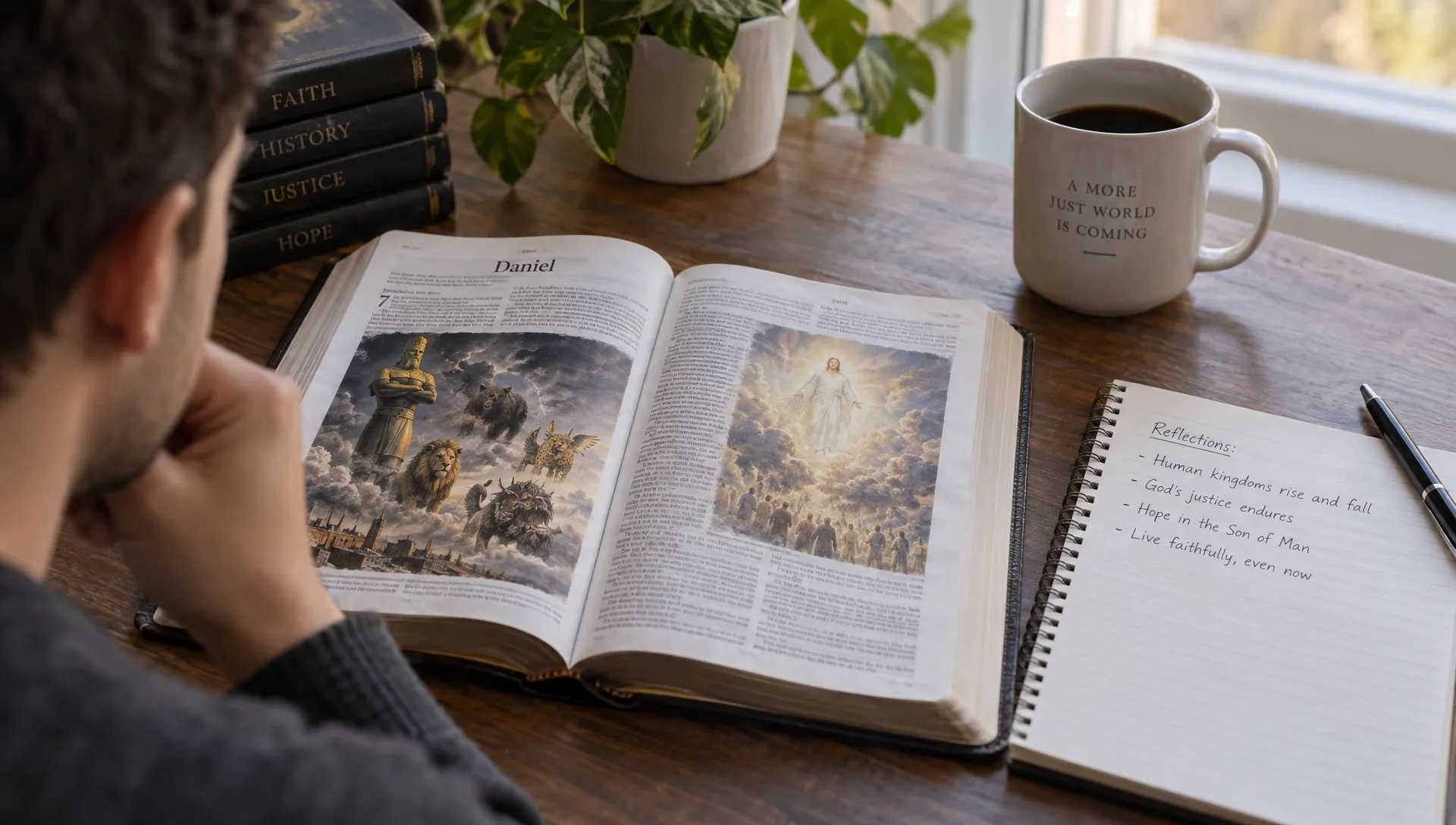
Daniel 7:13-14: Destructive Powers Will Not Rule Forever
Daniel’s vision includes frightening beasts representing kingdoms, followed by a heavenly court and divine judgment. Then “one like the Son of man” receives dominion, glory and a kingdom that will not pass away.
The vision does not minimize the violence of earthly power. It places that power beneath God’s judgment and contrasts temporary, destructive kingdoms with an enduring reign. Jesus later connects his own identity with this heavenly authority, including in Luke 22:69.
For readers discouraged by injustice, this kingdom scripture offers hope without asking them to call evil good. Oppressive power is real, but it is not ultimate. God’s purposes are not dependent on the permanence of any ruler or nation.
That assurance should not turn into confident predictions about which current event fulfills a particular detail of Daniel’s vision. The passage gives firmer ground than speculation: the kingdom God establishes will endure.
When the news leaves you overwhelmed, limit the cycle of repeated checking long enough to pray and act responsibly. Ask God to protect those suffering under violence or exploitation. Then consider a faithful response within your reach, such as supporting relief work or caring for a vulnerable neighbor.
Hebrews 12:28: You Can Receive an Unshakable Kingdom
Hebrews speaks of receiving “a kingdom which cannot be moved.” The surrounding passage contrasts the terror of Sinai with the believers’ approach to Mount Zion, the heavenly Jerusalem and Jesus, the mediator of the new covenant.
The writer also speaks about shaking: created things are not permanent, but what belongs to God’s enduring reign will remain. The response is gratitude and worship offered with reverence.
The promise in this kingdom scripture is not that your present arrangements cannot be shaken. Employment, health, relationships and familiar routines can change painfully. The promise concerns the kingdom you receive, not the stability of everything around you.
That distinction gives grief room to breathe. You can admit that a loss has unsettled you without concluding that God’s reign has become uncertain.
Try separating two statements in prayer: “This part of my life has changed” and “God’s kingdom has not collapsed.” Neither statement cancels the other.
Then thank God for something that remains true because of Christ: access to the Father, forgiveness or the hope of resurrection. Gratitude here is not an exercise in denying loss. It is a response to a gift that loss cannot remove.
Revelation 21:1-5: Sorrow and Death Will Not Have the Last Word
“And God shall wipe away all tears from their eyes.”
John’s vision of a new heaven and a new earth brings the Bible’s story toward its promised fulfillment. God dwells with his people, and death, mourning, crying and pain are no more. The one seated on the throne declares that he makes all things new.
This is future hope, not a demand that grieving Christians stop crying now. The promise of tears being wiped away acknowledges that there are tears to wipe away.
Read alongside the earlier kingdom scripture passages, Revelation 21 shows where God’s reign is leading: not merely endurance through brokenness, but the end of death and sorrow in his renewed creation.
If you are mourning, resist turning this passage into a deadline for feeling better. Let it give language to longing. You may pray, “Lord, I miss what I have lost. Thank you that death will not have the final word. Help me endure today.”
Christian hope does not require you to explain every tragedy. It rests in God’s promised future and the risen Christ who makes that future trustworthy.
How to Read Kingdom Scripture When Hope Feels Thin
Choose the passage that most closely meets your present need rather than rushing through all seven. Read its surrounding paragraph or chapter, then identify what it reveals about God before deciding what it asks of you.
A simple approach is to write three short sentences: “This passage shows me…,” “The burden I am bringing is…” and “One faithful response today would be….” Keep the response manageable. It might be asking for support, confessing a wrong, making a necessary phone call or resting instead of continuing to work.
Let kingdom scripture shape your prayer without turning it into a formula for controlling outcomes. Kingdom Signals’ guide to praying Scripture with faith rather than fear explores that distinction further.
You may not feel noticeably different after reading. That does not make the time wasted. Return to the passage over several days, and consider reading it with a trusted believer who can listen and pray with you.
Frequently Asked Questions
Which kingdom passage should I read when I feel anxious? Begin with Luke 12:22-34, especially verse 32. Read Jesus’ assurance about the Father’s generosity alongside his teaching about provision, possessions and trust.
Does seeking God’s kingdom mean life will become easier? No. Jesus’ teaching does not promise freedom from suffering. It gives believers a different foundation for their priorities and hope while they face real difficulties.
Can I have biblical hope and still feel sad? Yes. Revelation 21 promises the future removal of tears; it does not forbid tears now. Hope and grief can exist together. Seek support from trusted people, and get professional help when distress is persistent or interferes with daily life.
Keep Returning to the Promise
For today, choose one passage, read it in context and carry one truthful sentence into prayer. You do not need to manufacture a hopeful mood before coming to God.
For ongoing biblical encouragement, visit Kingdom Signals to explore the devotional articles, free guide and weekly newsletter.