


When your thoughts will not settle, scripture on faith in God can give you something steadier than another attempt to reassure yourself. The Bible does not ask you to pretend that trouble is small. It directs you toward the God who meets you in it, hears your prayers and offers peace through Jesus Christ.
You may need that reassurance before a difficult conversation, during a sleepless night or while carrying a burden that has no quick solution. These passages speak to those moments without promising that faith will make every uncomfortable feeling disappear.
Read slowly rather than trying to absorb every verse at once. Notice who is speaking, what the passage promises and how it invites you to respond. One verse understood in context can give you more to pray about than a page of quotations hurriedly scanned.
How Does Scripture on Faith in God Describe Peace?
The New Testament describes both peace with God and the peace of God. They are connected, but they are not identical.
Romans 5:1 describes peace with God through Jesus Christ. This is reconciliation, not simply a relaxed feeling. Philippians 4:6-7 describes God's peace guarding believers as they bring their concerns to him. Your relationship with God is not measured by how calm you feel this afternoon.
That distinction matters when anxiety returns. A racing heart does not automatically mean you have rejected God or failed at faith. You can belong to Christ, experience distress and still turn toward him for help.
The seven passages below offer different starting points for that response. Bible quotations are from the King James Version (KJV).
Seven Bible Passages to Read When You Need Peace
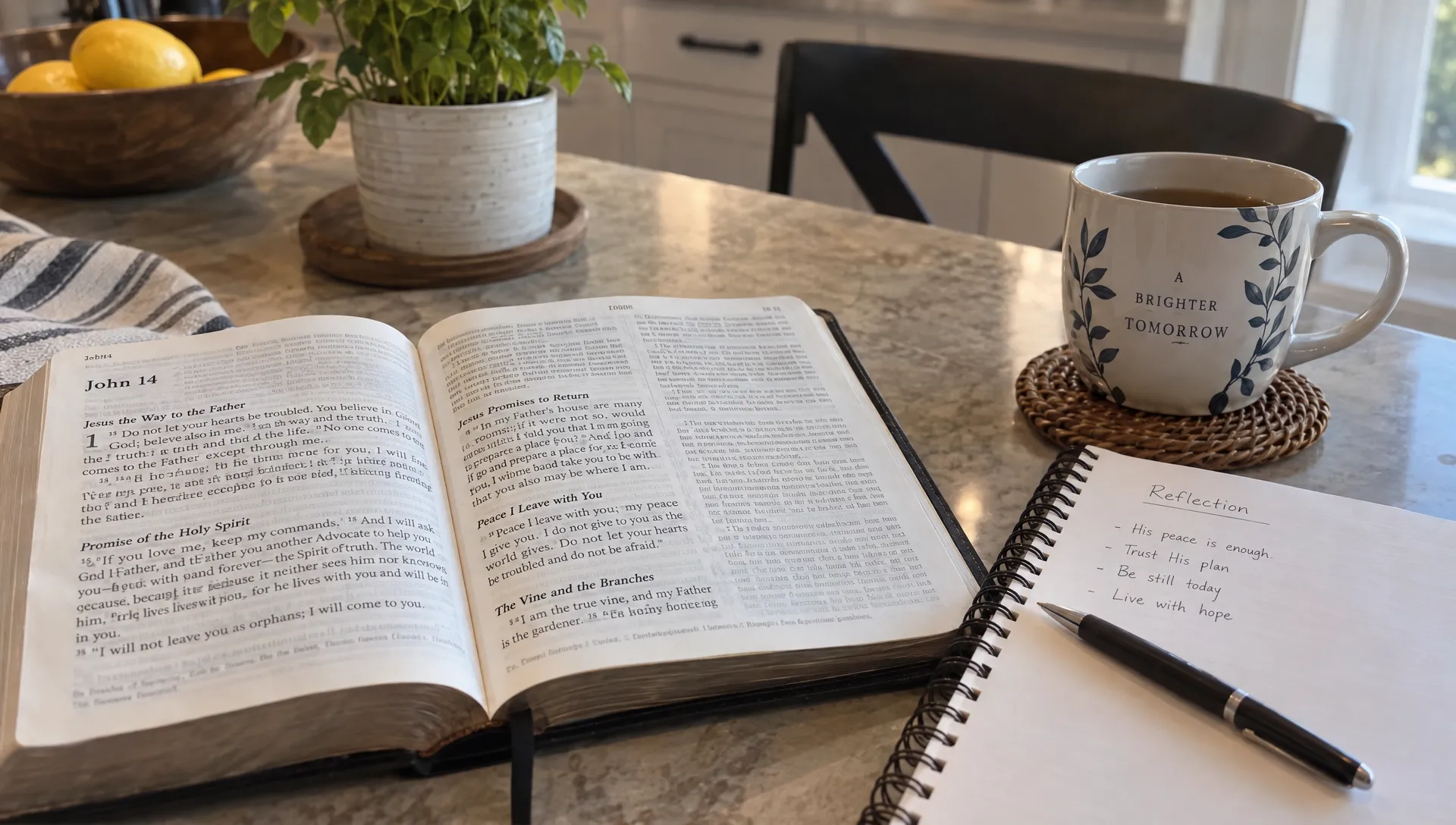
1. John 14:27: Receive the Peace Jesus Gives
“Peace I leave with you, my peace I give unto you: not as the world giveth, give I unto you.” (John 14:27, excerpt)
Jesus spoke these words to his disciples before his arrest and crucifixion. He was preparing them for his departure, not promising an undisturbed evening.
His peace rests on who he is and what he gives. It is not dependent on the disciples understanding everything that will happen next.
This scripture on faith in God invites you to receive peace from Christ rather than demanding that your circumstances become peaceful first. You can tell him exactly what is troubling you without making the removal of that trouble your condition for trusting him.
A simple prayer: Jesus, I cannot make everything around me quiet. Help me receive your peace in the situation I am actually facing.
2. Romans 5:1: Rest in Peace With God
“Therefore being justified by faith, we have peace with God through our Lord Jesus Christ.” (Romans 5:1)
Sometimes the deepest unrest is not about tomorrow. It is the fear that you must become more impressive, more useful or less troubled before God will welcome you.
Paul places peace with God on a different foundation: justification by faith through Jesus Christ. Your emotional composure does not earn this relationship.
When you confess sin, do so honestly. But do not confuse repentance with endlessly punishing yourself. Return to what Christ has done rather than treating a flawless devotional routine as the price of God's acceptance.
A simple prayer: Father, help me rest in what Jesus has done instead of trying to earn my way into peace with you.
3. Isaiah 26:3: Give Your Attention a Place to Rest
“Thou wilt keep him in perfect peace, whose mind is stayed on thee: because he trusteth in thee.” (Isaiah 26:3)
This verse belongs to a song of trust in God's salvation. Its focus is not the power of concentration but the trustworthiness of God.
A mind “stayed” on God has somewhere to return when attention wanders. That does not require repeating a verse until every unwanted thought disappears. You might read the passage, name the concern interrupting you and bring your attention back to God's character.
Reading scripture on faith in God this way is an act of trust, not a test of mental control. The verse directs your attention toward the One who keeps you.
A simple prayer: Lord, my attention keeps returning to what frightens me. Help me return to you with those same concerns.
4. Psalm 56:3: Trust God While You Are Afraid
“What time I am afraid, I will trust in thee.” (Psalm 56:3)
The psalmist does not say that trust begins once fear has ended. Fear is the occasion for turning toward God.
That makes this a useful verse when your body feels unsettled or your thoughts are moving quickly. You do not need to manufacture confidence before praying. You can acknowledge, “I am afraid,” and then ask for help.
Read the surrounding psalm too. It includes danger, tears and confidence that God knows the psalmist's suffering. Biblical trust makes room for honest lament rather than replacing it with cheerful language.
A simple prayer: God, I am afraid right now. I trust that you hear me, even while I am still trembling.
5. Philippians 4:6-7: Bring the Actual Request
“And the peace of God, which passeth all understanding, shall keep your hearts and minds through Christ Jesus.” (Philippians 4:7)
The preceding verse calls believers to bring their requests to God through prayer, supplication and thanksgiving. Paul gives them something to do with their concerns rather than telling them to conceal them.
Be specific. Instead of praying only, “Help everything work out,” name the appointment, unpaid bill or difficult relationship. Thank God for a real mercy without pretending the problem is pleasant.
This scripture on faith in God promises peace that guards the heart and mind through Christ. It does not say that prayer gives you control over every outcome. You can ask boldly while leaving the answer with God.
A simple prayer: Father, this is what I need and this is what I fear. Thank you for hearing me. Guard my heart as I wait.
6. Matthew 11:28-30: Come to Jesus With Your Weariness
“Come unto me, all ye that labour and are heavy laden, and I will give you rest.” (Matthew 11:28)
Jesus follows this invitation by calling people to take his yoke and learn from him. The rest he offers belongs within a relationship of discipleship, not a life without responsibility.
If you are exhausted, consider what you are carrying. Some burdens are genuine duties. Others may come from trying to please everyone, prove your worth or control another person's choices.
Coming to Jesus can include accepting your limits. You may need sleep, a truthful conversation or help with a task. Receiving those ordinary forms of care does not compete with trusting him.
A simple prayer: Jesus, show me what faithfulness requires today and what I am carrying that you have not asked me to carry.
7. 1 Peter 5:7: Entrust Your Cares to the One Who Cares
“Casting all your care upon him; for he careth for you.” (1 Peter 5:7)
This verse follows a call to humility before God. Entrusting your concerns to him includes admitting that you cannot sustain yourself by control alone.
The reason Peter gives is personal: God cares for you. You are not submitting a request to someone indifferent to your distress.
Returning to scripture on faith in God can help you remember that care when worry returns. Bringing the same concern again is not necessarily a failure to trust. It can be another honest act of dependence.
You can also receive God's care through people. Asking for biblical support while carrying life's burdens may mean telling a trusted friend, pastor or counselor what is happening. Persistent anxiety that disrupts daily life also deserves attention from a qualified healthcare professional.
A simple prayer: Father, I cannot hold all of this alone. Help me entrust my cares to you and receive the help available to me.
Practice Peace Within an Ordinary Workday
Faith does not require ignoring practical problems. If work is feeding your anxiety, distinguish the task you can address from the outcome you cannot guarantee.
For someone responsible for sales, a B2B prospecting platform such as Prosperian may help organize outreach. That is a practical use of a tool, not a source of spiritual security. Your value before God does not rise and fall with the next response or booked meeting.
Take the responsible action available to you, set a reasonable stopping time and pray about what remains outside your control. Biblical peace can coexist with careful work, realistic planning and unfinished tasks.
A Simple Way to Pray One Passage Today
Choose the verse that most closely addresses your present burden. You do not need to work through all seven before you can begin.
Try this short practice:
- Read in context: Include the surrounding verses so you can understand the promise or invitation.
- Name your concern: Tell God plainly what is troubling you, without editing it into religious language.
- Respond to the passage: Thank him, ask for help or confess where you have tried to carry everything alone.
- Take one faithful step: Make the call, ask for support, apologize or rest, as your situation requires.
Praying scripture on faith in God is not a method for forcing yourself into a particular emotional state. It is a way of responding to God with what he has revealed. If you need more guidance, this approach to praying Scripture with faith rather than fear can help you continue.
Frequently Asked Questions
What is a powerful Bible verse for faith and peace? Isaiah 26:3 is a helpful place to begin because it connects peace with trusting God. John 14:27 is especially useful when you need to remember that Jesus gives peace amid trouble, not only after trouble ends.
What did Jesus say about faith in God? In Mark 11:22, Jesus said, “Have faith in God.” Christian faith is directed toward God himself, not toward the strength of your confidence. Jesus also taught his followers to pray for the Father's will in Matthew 6:10.
Does feeling anxious mean I lack faith? Not automatically. Psalm 56:3 places fear and trust in the same sentence. You can be distressed and still turn toward God. Prayer, support from your church and professional care can all have a place in responding to anxiety.
How often should I read these passages? There is no required schedule. Return to scripture on faith in God as part of an ongoing relationship with him, not as a quota to complete. Read slowly enough to understand the passage and respond honestly.
Keep One Passage Close This Week
Choose one verse, read its surrounding passage and make it part of your prayers this week. When worry returns, you have somewhere to turn without pretending that everything is easy.
For continued Scripture-based encouragement, explore Kingdom Signals and its weekly biblical newsletter.