

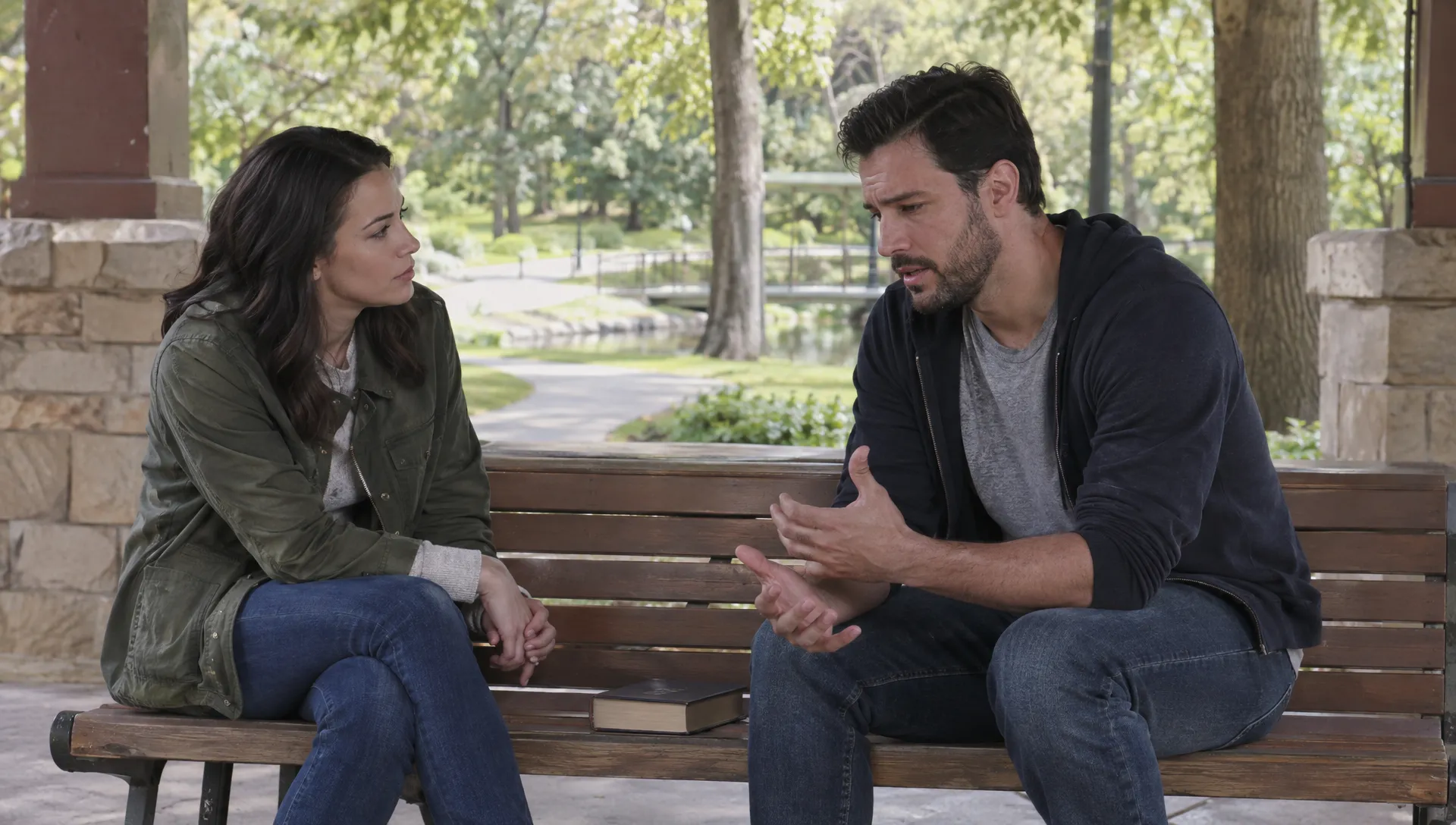
You can want to find God and still wonder whether he hears you, whether Scripture is trustworthy or whether your faith can survive another disappointment. Doubt often becomes more painful when you believe you must hide it to remain a good Christian.
Begin with honesty, not forced certainty. Name the question you are carrying, bring it into prayer and examine it with Scripture and trustworthy people. None of those steps guarantees an immediate answer. They do give you a way forward that does not depend on pretending.
Christian faith rests on God's initiative in Jesus, not your ability to maintain an uninterrupted feeling of confidence.
Name the Question Beneath Your Doubt
Before trying to solve everything, identify what has become difficult to believe. “I'm doubting God” can describe several different experiences:
- Intellectual doubt: You have questions about God's existence, the resurrection or the reliability of the Bible.
- Emotional doubt: You still believe, but grief, exhaustion or unanswered prayer makes God seem distant.
- Relational doubt: A church leader or Christian community harmed you, making trust feel unsafe.
- Moral doubt: You struggle to reconcile God's goodness with suffering or a difficult biblical passage.
These experiences can overlap, but they call for different responses. A historical question deserves careful investigation. Betrayal requires acknowledgment, boundaries and accountability. Exhaustion may require rest before another demanding spiritual routine.
Write one sentence that begins, “The hardest thing for me to believe right now is…” Be specific enough that someone else could understand the question.
That clarity matters when you are trying to find God because it separates a particular struggle from the sweeping conclusion that your entire faith is false. You may be questioning one teaching, one person's conduct or one expectation you held about prayer.
If your main struggle is numbness rather than disbelief, the guidance on what to do when you feel spiritually dry may help you distinguish those experiences without minimizing either.
Notice How Jesus Responds to Uncertainty
The Bible does not present faith as a life without difficult questions. It records people bringing confusion, protest and incomplete trust into their encounters with God.
In Mark 9:14–29, a father asks Jesus to help his suffering son. His response is strikingly honest: “I believe; help my unbelief!” He does not wait until every doubt disappears before asking for help.
The passage describes a particular encounter with Jesus, not a promise that every illness will be healed when someone prays sincerely enough. Its relevance here is the father's honesty: belief and struggle appear in the same sentence.
Thomas also refuses to accept the other disciples' report that Jesus has risen. In John 20:24–29, Jesus meets him, invites him to examine his wounds and calls him to believe. Jesus does not affirm unbelief as the destination, but he engages Thomas rather than avoiding his questions.
Psalm 13 gives another form of faithful speech: lament. David asks how long God will seem to forget him before expressing renewed trust. The complaint belongs within the prayer, not outside it.
These passages do not answer every objection. They do show that the desire to find God can begin with an honest appeal rather than a polished confession. You can ask for help while admitting that trust is difficult.
Give Your Question Something Concrete to Engage
Vague doubt can expand until it touches everything. A specific question gives you something to investigate.
If you wonder whether Christianity is true, consider beginning with Jesus. Read a Gospel in manageable portions, paying attention to what the text claims about his actions, identity, death and resurrection. Mark offers a relatively short starting point; John gives extended attention to Jesus' identity and people's responses to him.
As you read, distinguish observation from conclusion. “Jesus says this” is an observation. “This claim cannot be true” is a conclusion that deserves its own reasons. Neither agreement nor disagreement should require careless reading.
Choose one question for further study rather than collecting dozens of objections in a single evening. You might ask what historians can establish about Jesus, how a particular biblical book developed or how Christians interpret a troubling passage. A thoughtful pastor, a biblical commentary or a course can help you pursue that question in context.
To find God through Scripture is not to treat every verse as a personalized signal. Read the surrounding passage, consider its original audience and avoid turning a promise about a particular situation into a guarantee about your own timeline.
You do not have to suppress objections. Give them enough attention that you can explain both the question and the strongest answer you have encountered.
How to Find God When Prayer Feels Difficult
Prayer does not require you to report feelings you do not have. If you feel angry, uncertain or disappointed, begin there.
You could pray:
“God, I do not know what I believe about this right now. I want to know what is true. Help me face my questions honestly, recognize what is trustworthy and take the next step without pretending.”
If even that feels impossible, read Psalm 13 slowly. Borrowing the language of biblical lament can help when your own words feel unavailable. Notice that the psalm names pain and asks for help; it does not require the speaker to call suffering good.
Keep the practice small. Set aside a few minutes to read a passage, name one question and pray about it. The purpose is attention, not earning God's approval through consistency.
Also resist making every coincidence, emotion or silence into a message. An unexpected feeling may be meaningful to you, but it is not automatically divine guidance. Test spiritual impressions against Scripture and seek wise counsel before making consequential decisions.
You may continue trying to find God without experiencing an immediate sense of closeness. A quiet prayer still expresses what you are asking, even when no reassuring feeling follows. Do not turn the absence of that feeling into a verdict on your worth or sincerity.

Keep Ordinary Decisions in Their Proper Place
Doubt rarely arrives when life is otherwise empty. You may be changing jobs, caring for a parent or preparing for marriage while carrying questions about God. The pressure to make a major decision can intensify the desire for unmistakable spiritual certainty.
Separate practical preparation from questions that need deeper conversation. For example, a couple planning a wedding in the Netherlands might explore bridalwear and wedding suits at Le Michel in Geffen while also making time for premarital counseling. An appointment for wedding attire addresses one need; honest conversation about belief, commitment and expectations addresses another.
Neither a smooth planning season nor a difficult one proves God's approval or absence. You can make responsible preparations without treating every obstacle as a spiritual sign.
The same principle applies to work, family responsibilities and daily routines. When a decision is not urgent, give yourself time to gather information and seek counsel. When action is necessary, choose the most responsible step available rather than waiting for complete emotional certainty.
As you seek to find God, ordinary faithfulness can continue alongside unresolved questions. Keeping a promise, caring for someone or admitting a mistake does not solve an intellectual objection. It does keep uncertainty from becoming permission to abandon the responsibilities already clear to you.
Choose People Who Can Handle Honest Questions
Not everyone who offers an answer is equipped to help. Look for someone who listens carefully, distinguishes what they know from what they assume and does not use shame to end the conversation.
A useful opening might be: “I need to talk about my faith, but I'm not looking for a quick explanation. Could you listen first and help me work through one question?” That request gives the other person a clearer role than “Fix my doubts.”
A trusted pastor, mature Christian friend or thoughtful small-group leader may provide spiritual support. When doubt is entangled with abuse, trauma, persistent anxiety or depression, a qualified mental health professional can address needs that pastoral conversation alone may not meet. Seeking that help is not evidence of spiritual failure.
If a church or leader harmed you, you do not owe that person access to your questions. Seek support outside their authority, and do not confuse pressure to reconcile quickly with genuine safety or accountability.
You do not need to find God in isolation, but community should make truthful conversation possible rather than punish it. The reflection on how faith steadies you in uncertain times offers a related perspective on trust without demanding immediate answers.
Progress may initially look like a more precise question, a healthier boundary or the willingness to read a passage you had been avoiding. Those changes deserve attention even before confidence returns.
Frequently Asked Questions
Is doubting God a sin? Questions, confusion and emotional struggle should not all be treated as the same thing. Scripture includes honest lament and requests for help with unbelief. It also calls people toward trust. Examine the particular doubt you are carrying instead of declaring every question sinful or assuming every response to doubt is harmless.
Can I find God if I am not sure I believe? You can begin by honestly seeking what is true. Read a Gospel, ask specific questions and pray with whatever sincerity you have. Christian teaching presents God as the one who takes the initiative to make himself known, not a reward for achieving perfect confidence.
Why don't I feel God when I pray? There may be no single explanation. Stress, grief, exhaustion and expectations about what prayer should feel like can affect your experience. A lack of emotion does not by itself establish that God is absent. Persistent distress deserves care, not speculation about hidden spiritual failure.
How long should a season of doubt last? There is no reliable timetable. Some questions become clearer quickly; others require extended study, healing or conversation. Seek appropriate support and notice whether your approach is helping you think honestly or keeping you trapped in repetitive fear.
Continue With Scripture-Based Encouragement
For ongoing reflection, explore Kingdom Signals, including its devotional articles, free guide and weekly biblical newsletter. These resources can support regular engagement with Scripture while you work through your questions.
Start with the passage or specific question you identified here. Bring it to a trustworthy conversation, and use ongoing biblical encouragement as support rather than a substitute for the careful attention your doubt deserves.